
Interview
5 min read
The Silent Resume Killer: Why Senior Professionals Fail ATS Screening
Published Date:
|
Last Modified:
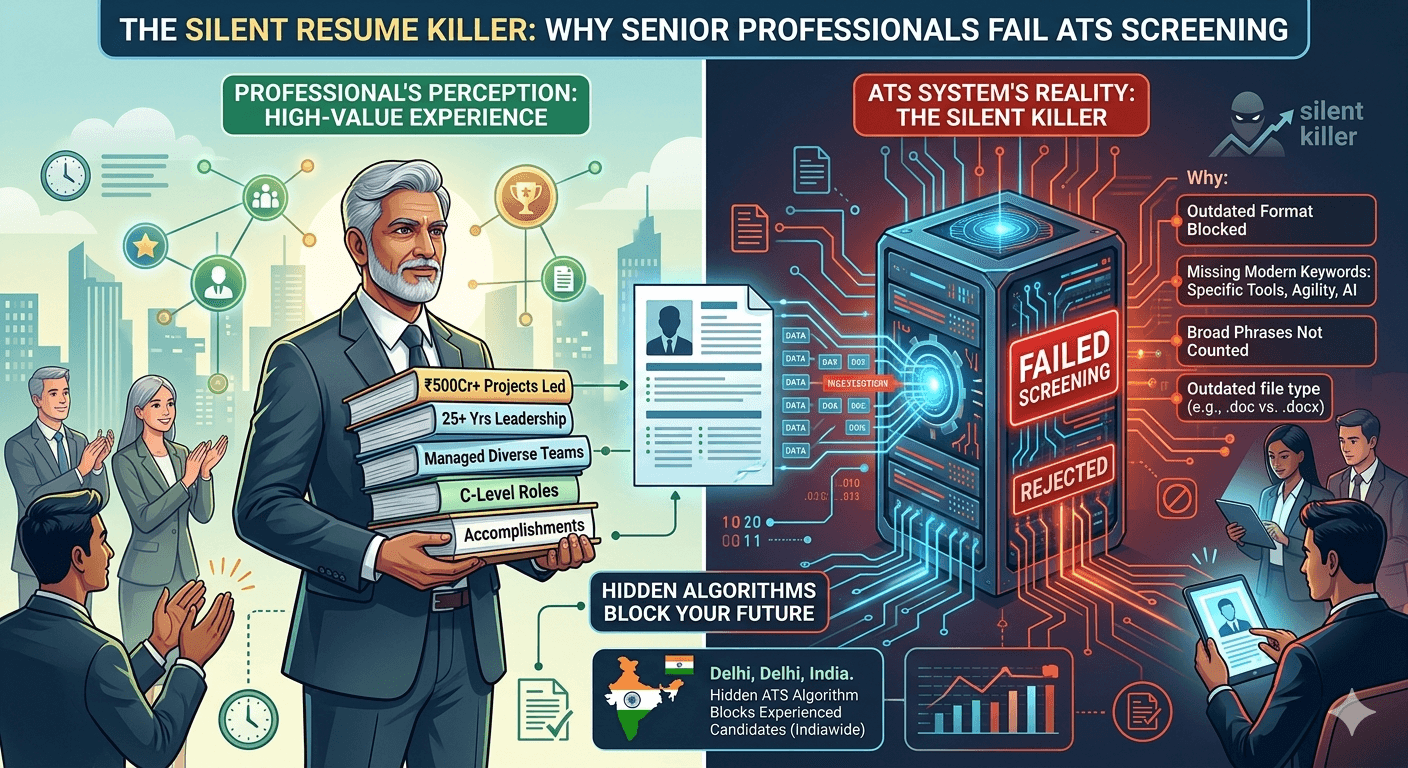
If you’re a mid-to-senior professional with 10–25+ years of experience, your biggest job search risk isn’t lack of capability.
It’s invisibility.
Not because you’re unqualified.
But because your resume never makes it past the first gate: the ATS (Applicant Tracking System).
And here’s the uncomfortable truth—
the more experienced you are, the more likely you are to fail it.
The Illusion of Experience
Senior professionals operate with a dangerous assumption:
“My experience will speak for itself.”
It won’t.
ATS systems don’t understand leadership depth, strategic thinking, or business transformation unless it is translated into machine-readable signals.
So while you believe you’re showcasing 20 years of excellence…
…the ATS sees a misaligned document with missing keywords, vague achievements, and poor structure.
And it rejects you in under 7 seconds.
The Real Problem Isn’t ATS — It’s Positioning
Most advice blames ATS algorithms.
That’s lazy thinking.
ATS is not your enemy. It’s just a filter.
The real issue is this:
Senior professionals write resumes like historians, not strategists.
They document everything.
They explain roles.
They describe responsibilities.
But hiring systems—and recruiters—are scanning for something very specific:
Relevance
Alignment
Signal density
If your resume doesn’t match the exact language of the role, you’re out.
5 Silent Resume Killers That Senior Professionals Miss
1. Generic Executive Branding
“Seasoned leader with 20+ years of experience…”
This is the fastest way to blend into irrelevance.
ATS looks for role-specific identity markers:
“VP Growth – B2B SaaS”
“Supply Chain Transformation Leader”
“P&L Owner – FMCG India Market”
If your headline isn’t tightly aligned, your resume loses ranking instantly.
2. Keyword Mismatch (The #1 ATS Failure Point)
Every job description has a hidden pattern:
Repeated skills
Tools
Domain language
Senior professionals ignore this.
They reuse one master resume for all roles.
Result:
Missing keywords
Low ATS score
Zero visibility
Reality:
If your resume doesn’t mirror the job description language, you don’t exist in the system.
3. Responsibility Overload, Impact Deficit
Most senior resumes look like this:
“Led a team of 20”
“Managed operations”
“Handled key accounts”
That’s not impact. That’s job description.
ATS—and recruiters—prioritize:
Metrics
Outcomes
Business impact
Compare this:
“Led sales team”
“Led 18-member sales team driving ₹120Cr revenue, achieving 32% YoY growth”
One gets ignored.
The other gets shortlisted.
4. Lack of Narrative Alignment
Your resume isn’t just a document.
It’s a strategic story of progression.
But senior professionals often:
Jump across roles without context
Show scattered achievements
Lack a clear career arc
ATS systems now evaluate contextual consistency.
If your profile looks unfocused, your ranking drops.
5. Over-Complex Formatting
Ironically, the more senior you are, the more “designed” your resume becomes.
Columns. Graphics. Fancy layouts.
ATS hates this.
It struggles to parse:
Multi-column formats
Tables
Icons
Text boxes
Your beautifully designed resume becomes unreadable to the system.
And gets rejected silently.
Why This Problem Is Getting Worse
The job market has evolved.
For ₹50L–₹1Cr roles:
Hundreds of highly qualified candidates apply
Recruiters rely heavily on ATS filtering
Only the top 5–10% of aligned resumes are reviewed manually
This means:
You’re not competing on experience. You’re competing on precision.
And most senior professionals are simply not optimized for this new game.
The Shift: From Resume Writing to Resume Engineering
To win ATS screening today, you need to stop “writing” resumes.
You need to engineer them.
That means:
Reverse-engineering job descriptions
Mapping your experience to market demand
Embedding high-frequency keywords naturally
Structuring achievements into CAR (Context–Action–Result) format
Maintaining narrative consistency across roles
This is not a one-time activity.
It’s a systemized process per application.
The Hard Truth
If you’re applying to roles and not hearing back, it’s not because:
You lack experience
You’re too senior
The market is bad
It’s because:
Your resume is invisible to the system that decides your fate.
What Top 1% Candidates Do Differently
High-performing candidates don’t rely on luck.
They build job search systems.
They:
Customize resumes per role
Align deeply with job descriptions
Use data-backed storytelling
Optimize for both ATS and human decision-makers
And most importantly…
They treat job search like a strategic campaign, not a passive process.
Final Thought
The ATS isn’t rejecting you.
It’s exposing a gap.
A gap between your experience and how it’s positioned in the market.
Close that gap—and everything changes:
More visibility
More interviews
Better offers
Because in today’s job market:
The best candidate doesn’t win.
The best-positioned candidate does.

As a co-founder and CEO of NxtJob.ai, I help mid and senior level professionals land 3-5 job offers within 3 months with a substantial salary hike. I am an Internationally Certified Career Coach, Resume Writing Expert, Job Interview and LinkedIn Strategist, and a Motivational Speaker.
Richik Sinha Roy
CEO, NxtJob
Recent articles

Resume
5 min read
ATS Resume Format: How to Create a Resume That Gets Past Applicant Tracking Systems
Learn how to create an ATS-friendly resume that passes through applicant tracking systems and increases your chances of landing an interview.
Resume
5 min read
ATS Resume Format: How to Create a Resume That Gets Past Applicant Tracking Systems
Learn how to create an ATS-friendly resume that passes through applicant tracking systems and increases your chances of landing an interview.
Resume
5 min read
ATS Resume Format: How to Create a Resume That Gets Past Applicant Tracking Systems
Learn how to create an ATS-friendly resume that passes through applicant tracking systems and increases your chances of landing an interview.
Resume
5 min read
ATS Resume Format: How to Create a Resume That Gets Past Applicant Tracking Systems
Learn how to create an ATS-friendly resume that passes through applicant tracking systems and increases your chances of landing an interview.
Resume
5 min read
ATS Resume Format: How to Create a Resume That Gets Past Applicant Tracking Systems
Learn how to create an ATS-friendly resume that passes through applicant tracking systems and increases your chances of landing an interview.
Resume
5 min read
ATS Resume Format: How to Create a Resume That Gets Past Applicant Tracking Systems
Learn how to create an ATS-friendly resume that passes through applicant tracking systems and increases your chances of landing an interview.
Everything you need to know
Here you can find solutions to all your queries.
Interview
5 min read
The Silent Resume Killer: Why Senior Professionals Fail ATS Screening
Published Date:
|
Last Modified:
If you’re a mid-to-senior professional with 10–25+ years of experience, your biggest job search risk isn’t lack of capability.
It’s invisibility.
Not because you’re unqualified.
But because your resume never makes it past the first gate: the ATS (Applicant Tracking System).
And here’s the uncomfortable truth—
the more experienced you are, the more likely you are to fail it.
The Illusion of Experience
Senior professionals operate with a dangerous assumption:
“My experience will speak for itself.”
It won’t.
ATS systems don’t understand leadership depth, strategic thinking, or business transformation unless it is translated into machine-readable signals.
So while you believe you’re showcasing 20 years of excellence…
…the ATS sees a misaligned document with missing keywords, vague achievements, and poor structure.
And it rejects you in under 7 seconds.
The Real Problem Isn’t ATS — It’s Positioning
Most advice blames ATS algorithms.
That’s lazy thinking.
ATS is not your enemy. It’s just a filter.
The real issue is this:
Senior professionals write resumes like historians, not strategists.
They document everything.
They explain roles.
They describe responsibilities.
But hiring systems—and recruiters—are scanning for something very specific:
Relevance
Alignment
Signal density
If your resume doesn’t match the exact language of the role, you’re out.
5 Silent Resume Killers That Senior Professionals Miss
1. Generic Executive Branding
“Seasoned leader with 20+ years of experience…”
This is the fastest way to blend into irrelevance.
ATS looks for role-specific identity markers:
“VP Growth – B2B SaaS”
“Supply Chain Transformation Leader”
“P&L Owner – FMCG India Market”
If your headline isn’t tightly aligned, your resume loses ranking instantly.
2. Keyword Mismatch (The #1 ATS Failure Point)
Every job description has a hidden pattern:
Repeated skills
Tools
Domain language
Senior professionals ignore this.
They reuse one master resume for all roles.
Result:
Missing keywords
Low ATS score
Zero visibility
Reality:
If your resume doesn’t mirror the job description language, you don’t exist in the system.
3. Responsibility Overload, Impact Deficit
Most senior resumes look like this:
“Led a team of 20”
“Managed operations”
“Handled key accounts”
That’s not impact. That’s job description.
ATS—and recruiters—prioritize:
Metrics
Outcomes
Business impact
Compare this:
“Led sales team”
“Led 18-member sales team driving ₹120Cr revenue, achieving 32% YoY growth”
One gets ignored.
The other gets shortlisted.
4. Lack of Narrative Alignment
Your resume isn’t just a document.
It’s a strategic story of progression.
But senior professionals often:
Jump across roles without context
Show scattered achievements
Lack a clear career arc
ATS systems now evaluate contextual consistency.
If your profile looks unfocused, your ranking drops.
5. Over-Complex Formatting
Ironically, the more senior you are, the more “designed” your resume becomes.
Columns. Graphics. Fancy layouts.
ATS hates this.
It struggles to parse:
Multi-column formats
Tables
Icons
Text boxes
Your beautifully designed resume becomes unreadable to the system.
And gets rejected silently.
Why This Problem Is Getting Worse
The job market has evolved.
For ₹50L–₹1Cr roles:
Hundreds of highly qualified candidates apply
Recruiters rely heavily on ATS filtering
Only the top 5–10% of aligned resumes are reviewed manually
This means:
You’re not competing on experience. You’re competing on precision.
And most senior professionals are simply not optimized for this new game.
The Shift: From Resume Writing to Resume Engineering
To win ATS screening today, you need to stop “writing” resumes.
You need to engineer them.
That means:
Reverse-engineering job descriptions
Mapping your experience to market demand
Embedding high-frequency keywords naturally
Structuring achievements into CAR (Context–Action–Result) format
Maintaining narrative consistency across roles
This is not a one-time activity.
It’s a systemized process per application.
The Hard Truth
If you’re applying to roles and not hearing back, it’s not because:
You lack experience
You’re too senior
The market is bad
It’s because:
Your resume is invisible to the system that decides your fate.
What Top 1% Candidates Do Differently
High-performing candidates don’t rely on luck.
They build job search systems.
They:
Customize resumes per role
Align deeply with job descriptions
Use data-backed storytelling
Optimize for both ATS and human decision-makers
And most importantly…
They treat job search like a strategic campaign, not a passive process.
Final Thought
The ATS isn’t rejecting you.
It’s exposing a gap.
A gap between your experience and how it’s positioned in the market.
Close that gap—and everything changes:
More visibility
More interviews
Better offers
Because in today’s job market:
The best candidate doesn’t win.
The best-positioned candidate does.
Negotiation
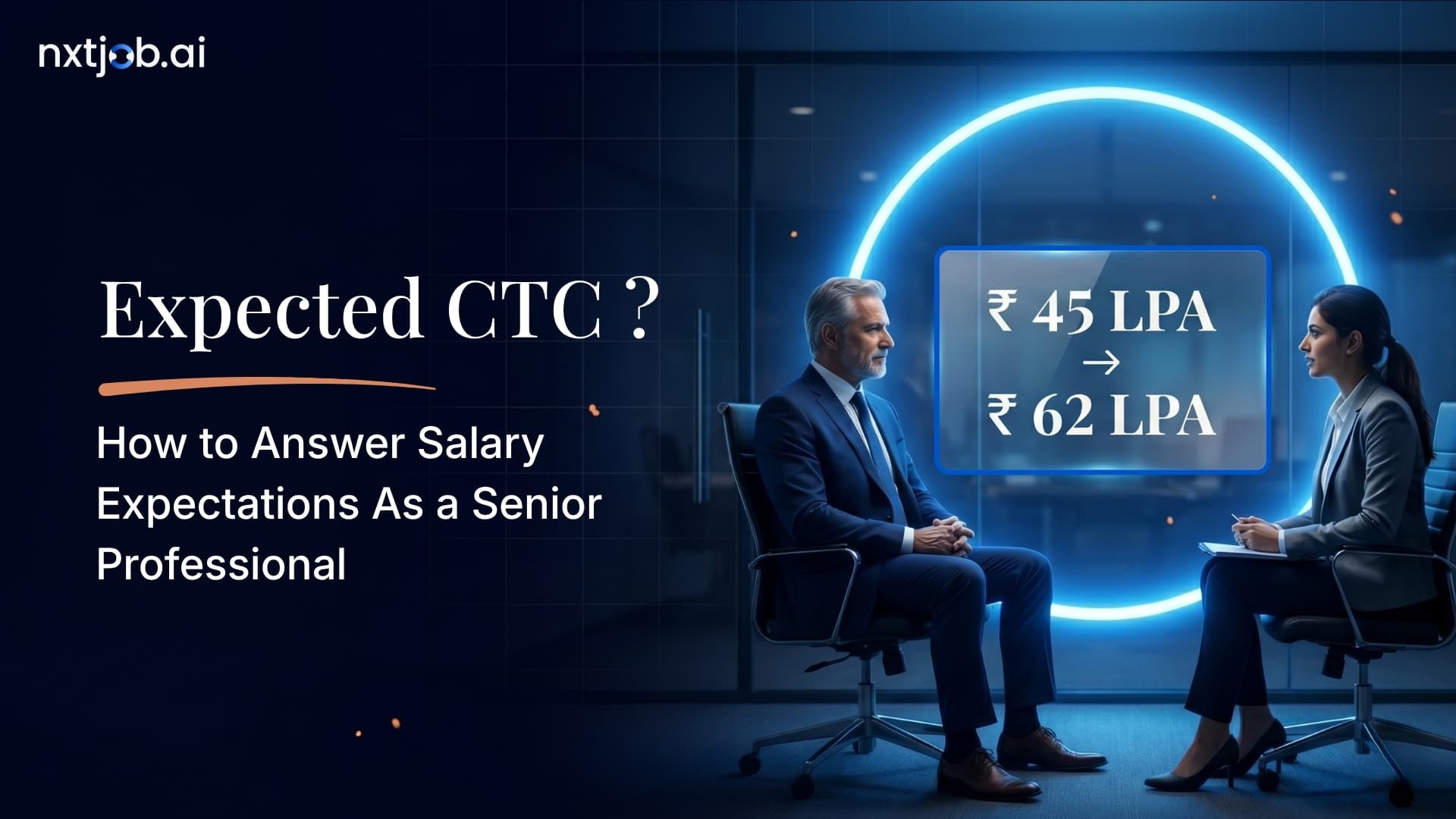
Expected CTC: How to Answer Salary Expectations As a Senior Professional
Learn how to answer the expected CTC question. Avoid early anchoring, handling HR pushback, and getting a fair salary offer.

Negotiation
Salary Negotiation Tactics: Why Senior Leaders Must Never Name a Number First
Learn advanced salary negotiation tactics to bypass HR budget caps, reframe your current CTC, and maximize your executive equity.
As a co-founder and CEO of NxtJob.ai, I help mid and senior level professionals land 3-5 job offers within 3 months with a substantial salary hike. I am an Internationally Certified Career Coach, Resume Writing Expert, Job Interview and LinkedIn Strategist, and a Motivational Speaker.
Richik Sinha Roy
CEO, NxtJob
Everything you need to know
Here you can find solutions to all your queries.
Interview
5 min read
The Silent Resume Killer: Why Senior Professionals Fail ATS Screening
Published Date:
|
Last Modified:
If you’re a mid-to-senior professional with 10–25+ years of experience, your biggest job search risk isn’t lack of capability.
It’s invisibility.
Not because you’re unqualified.
But because your resume never makes it past the first gate: the ATS (Applicant Tracking System).
And here’s the uncomfortable truth—
the more experienced you are, the more likely you are to fail it.
The Illusion of Experience
Senior professionals operate with a dangerous assumption:
“My experience will speak for itself.”
It won’t.
ATS systems don’t understand leadership depth, strategic thinking, or business transformation unless it is translated into machine-readable signals.
So while you believe you’re showcasing 20 years of excellence…
…the ATS sees a misaligned document with missing keywords, vague achievements, and poor structure.
And it rejects you in under 7 seconds.
The Real Problem Isn’t ATS — It’s Positioning
Most advice blames ATS algorithms.
That’s lazy thinking.
ATS is not your enemy. It’s just a filter.
The real issue is this:
Senior professionals write resumes like historians, not strategists.
They document everything.
They explain roles.
They describe responsibilities.
But hiring systems—and recruiters—are scanning for something very specific:
Relevance
Alignment
Signal density
If your resume doesn’t match the exact language of the role, you’re out.
5 Silent Resume Killers That Senior Professionals Miss
1. Generic Executive Branding
“Seasoned leader with 20+ years of experience…”
This is the fastest way to blend into irrelevance.
ATS looks for role-specific identity markers:
“VP Growth – B2B SaaS”
“Supply Chain Transformation Leader”
“P&L Owner – FMCG India Market”
If your headline isn’t tightly aligned, your resume loses ranking instantly.
2. Keyword Mismatch (The #1 ATS Failure Point)
Every job description has a hidden pattern:
Repeated skills
Tools
Domain language
Senior professionals ignore this.
They reuse one master resume for all roles.
Result:
Missing keywords
Low ATS score
Zero visibility
Reality:
If your resume doesn’t mirror the job description language, you don’t exist in the system.
3. Responsibility Overload, Impact Deficit
Most senior resumes look like this:
“Led a team of 20”
“Managed operations”
“Handled key accounts”
That’s not impact. That’s job description.
ATS—and recruiters—prioritize:
Metrics
Outcomes
Business impact
Compare this:
“Led sales team”
“Led 18-member sales team driving ₹120Cr revenue, achieving 32% YoY growth”
One gets ignored.
The other gets shortlisted.
4. Lack of Narrative Alignment
Your resume isn’t just a document.
It’s a strategic story of progression.
But senior professionals often:
Jump across roles without context
Show scattered achievements
Lack a clear career arc
ATS systems now evaluate contextual consistency.
If your profile looks unfocused, your ranking drops.
5. Over-Complex Formatting
Ironically, the more senior you are, the more “designed” your resume becomes.
Columns. Graphics. Fancy layouts.
ATS hates this.
It struggles to parse:
Multi-column formats
Tables
Icons
Text boxes
Your beautifully designed resume becomes unreadable to the system.
And gets rejected silently.
Why This Problem Is Getting Worse
The job market has evolved.
For ₹50L–₹1Cr roles:
Hundreds of highly qualified candidates apply
Recruiters rely heavily on ATS filtering
Only the top 5–10% of aligned resumes are reviewed manually
This means:
You’re not competing on experience. You’re competing on precision.
And most senior professionals are simply not optimized for this new game.
The Shift: From Resume Writing to Resume Engineering
To win ATS screening today, you need to stop “writing” resumes.
You need to engineer them.
That means:
Reverse-engineering job descriptions
Mapping your experience to market demand
Embedding high-frequency keywords naturally
Structuring achievements into CAR (Context–Action–Result) format
Maintaining narrative consistency across roles
This is not a one-time activity.
It’s a systemized process per application.
The Hard Truth
If you’re applying to roles and not hearing back, it’s not because:
You lack experience
You’re too senior
The market is bad
It’s because:
Your resume is invisible to the system that decides your fate.
What Top 1% Candidates Do Differently
High-performing candidates don’t rely on luck.
They build job search systems.
They:
Customize resumes per role
Align deeply with job descriptions
Use data-backed storytelling
Optimize for both ATS and human decision-makers
And most importantly…
They treat job search like a strategic campaign, not a passive process.
Final Thought
The ATS isn’t rejecting you.
It’s exposing a gap.
A gap between your experience and how it’s positioned in the market.
Close that gap—and everything changes:
More visibility
More interviews
Better offers
Because in today’s job market:
The best candidate doesn’t win.
The best-positioned candidate does.
Negotiation
Expected CTC: How to Answer Salary Expectations As a Senior Professional
Learn how to answer the expected CTC question. Avoid early anchoring, handling HR pushback, and getting a fair salary offer.
Negotiation
Salary Negotiation Tactics: Why Senior Leaders Must Never Name a Number First
Learn advanced salary negotiation tactics to bypass HR budget caps, reframe your current CTC, and maximize your executive equity.
As a co-founder and CEO of NxtJob.ai, I help mid and senior level professionals land 3-5 job offers within 3 months with a substantial salary hike. I am an Internationally Certified Career Coach, Resume Writing Expert, Job Interview and LinkedIn Strategist, and a Motivational Speaker.
Richik Sinha Roy
CEO, NxtJob
Recent articles
Resume
5 min read
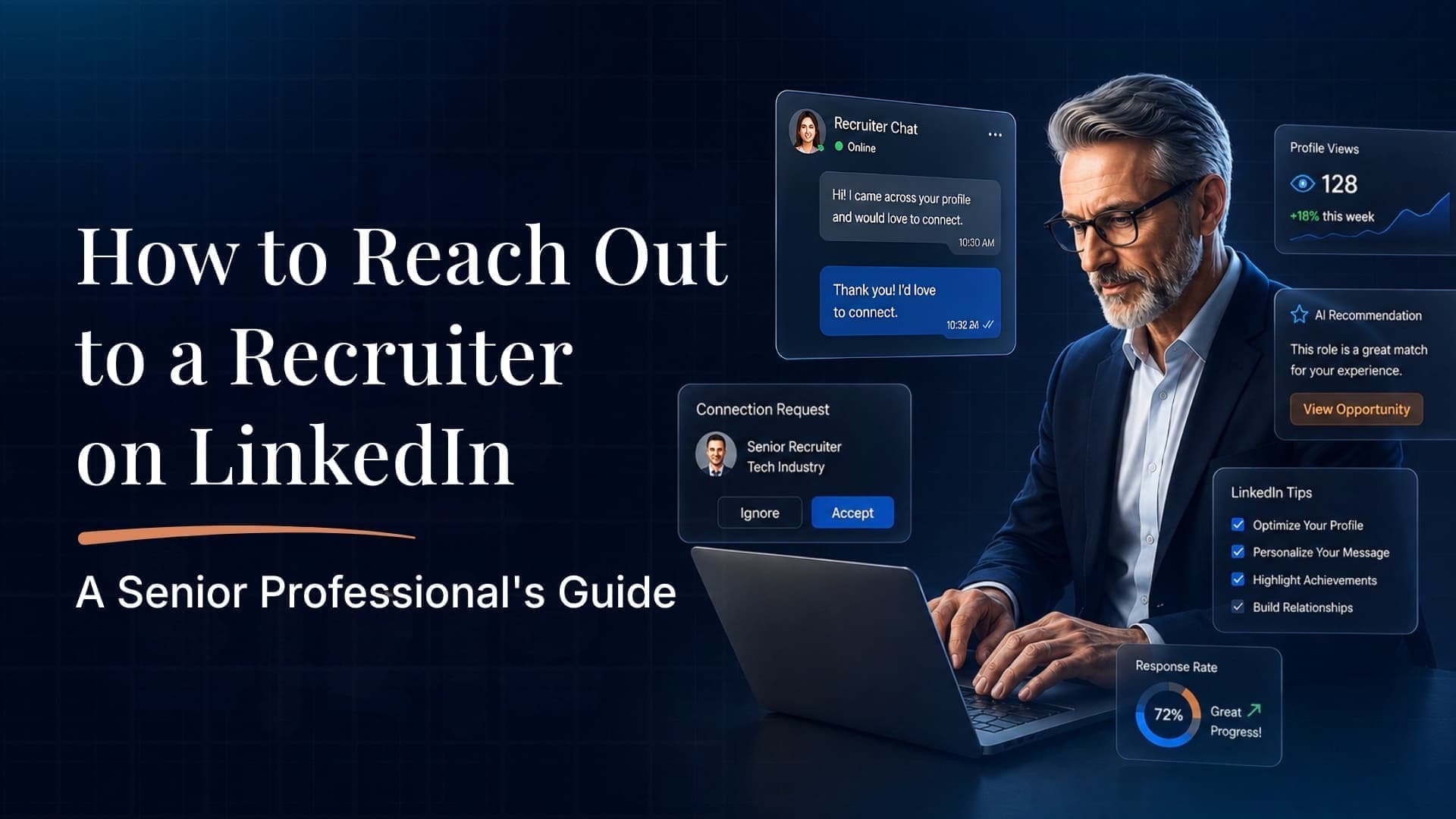
How to Reach Out to a Recruiter on LinkedIn: A Senior Professional’s Guide
Discover how senior professionals can use recruiter outreach, referrals, and networking to unlock better career opportunities on LinkedIn.
Resume
5 min read
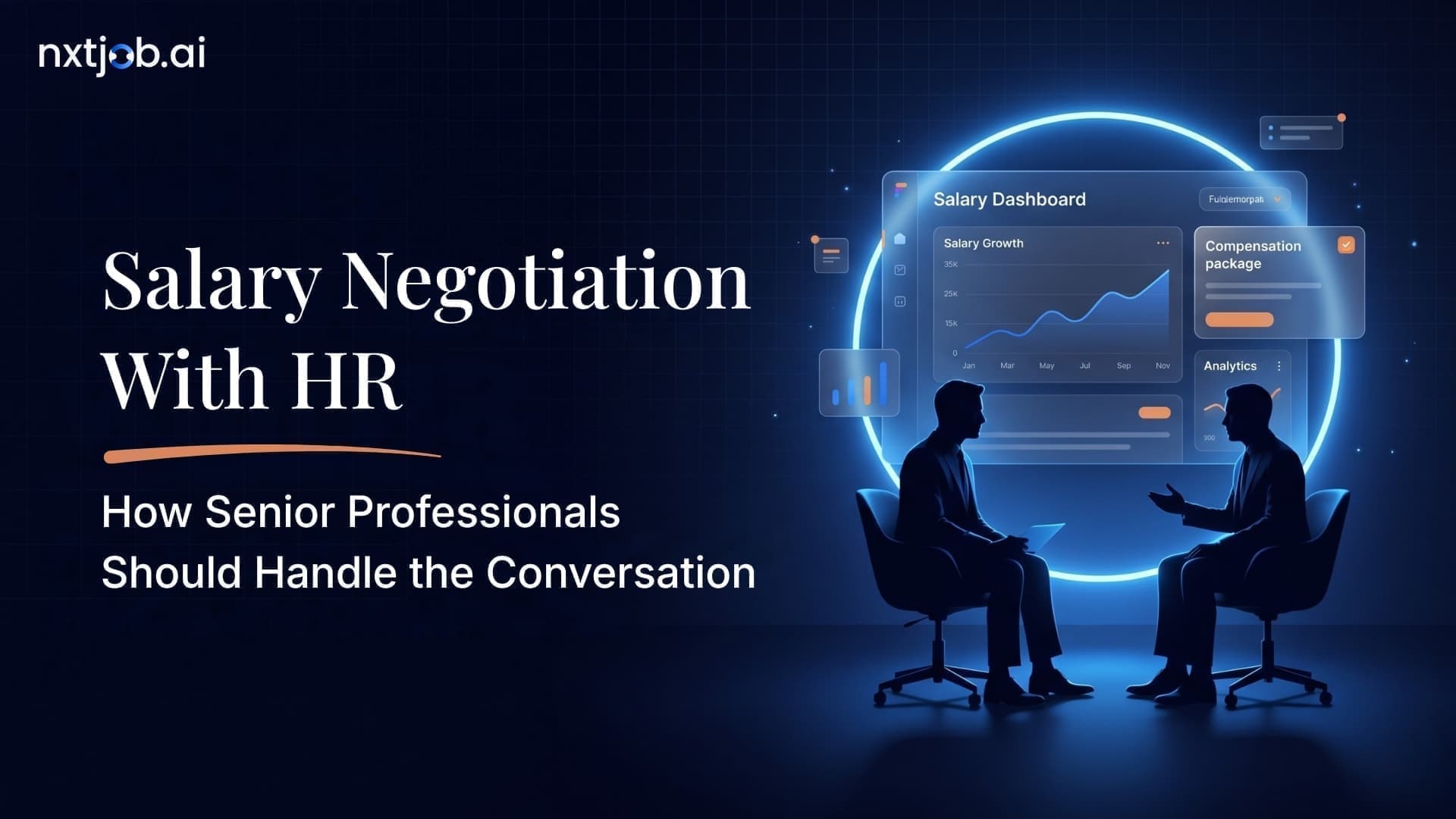
Salary Negotiation With HR: How Senior Professionals Should Handle the Conversation
Learn how senior professionals can handle salary negotiation with HR, respond to pushback, protect their value, and avoid underselling themselves.
Resume
5 min read
How to Make an ATS-Friendly Resume: Format, Tips, and Examples for Experienced Professionals
Learn how to make an ATS-friendly resume with the right format, keywords, structure, and role-specific details for experienced professionals.
Resume
5 min read
How to Reach Out to a Recruiter on LinkedIn: A Senior Professional’s Guide
Discover how senior professionals can use recruiter outreach, referrals, and networking to unlock better career opportunities on LinkedIn.
Resume
5 min read
Salary Negotiation With HR: How Senior Professionals Should Handle the Conversation
Learn how senior professionals can handle salary negotiation with HR, respond to pushback, protect their value, and avoid underselling themselves.
Everything you need to know
Here you can find solutions to all your queries.
Join the Revolution
Your AI career copilot to land you top jobs in under 90 days.
A Pinnacle Shift Company
by Richik Sinha Roy
Join the Revolution
Your AI career copilot to land you top jobs in under 90 days.
Join the Revolution
Your AI career copilot to land you top jobs in under 90 days.