Job search
5 min read
Why Senior Professionals Are Switching to AI-Powered Job Search Tools in 2025
Published Date:
|
Last Modified:
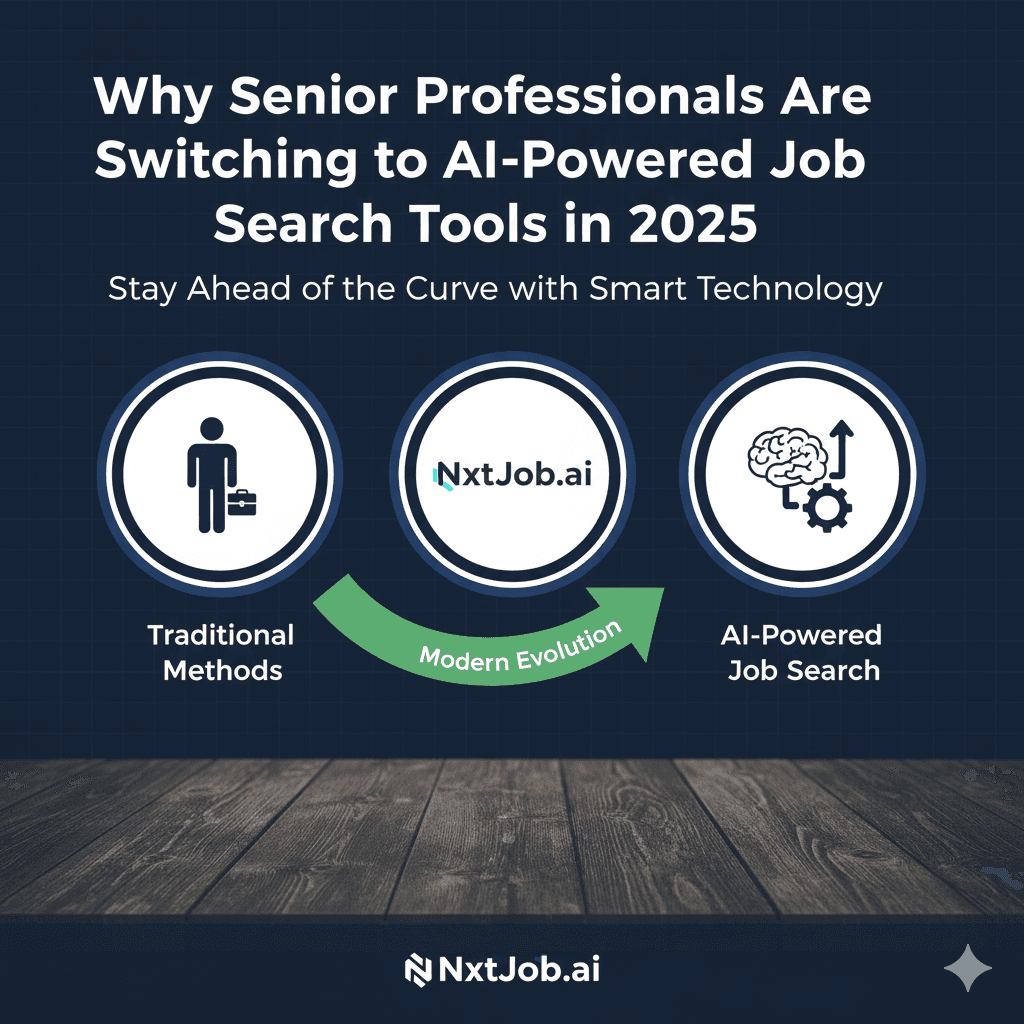
For a long time, experienced professionals followed a fairly simple playbook when they wanted a new role. Update the résumé. Apply on job portals. Wait. Follow up. Repeat.
It wasn’t exciting, but it worked. Or at least, it used to.
By 2025, that same approach doesn’t just feel dated. In many cases, it’s quietly hurting the search.
Hiring has shifted in ways most people didn’t fully notice until it was already too late. Recruiters now scan thousands of profiles in minutes. Résumés are filtered by systems long before a human recruiter ever gets involved. And many senior roles never even reach public job boards. They’re filled through referrals, internal networks, or data-led hiring tools that operate behind the scenes.
Which leads to an uncomfortable realization for many managers and leaders:
The job market evolved. Most professionals didn’t.
That gap is exactly why experienced professionals are turning to AI-powered job search tools. Not because it’s trendy. Not because it sounds impressive. But because it’s increasingly necessary.
The market moves faster than any individual can
In 2025, a single leadership opening can draw hundreds, sometimes thousands, of applications in days. Recruiters rely on automated screening, semantic matching, and scoring models just to stay afloat. Only a small fraction of candidates ever make it past that first filter.
AI tools help senior professionals keep pace by doing things humans simply can’t do consistently:
spotting roles before they’re publicly posted
flagging résumé gaps that automated systems penalize
adjusting language to align with how screening algorithms read experience
tracking shifts in demand across roles and industries in real time
Those who rely only on manual searching tend to get buried.
Those who use AI tend to surface earlier.
Senior careers require precision, not volume
At higher salary bands and seniority levels, the job search stops being about “finding something.” It becomes about fit. Scope. Influence. Growth. And, yes, compensation.
Mass applications rarely work here. They usually dilute positioning.
AI tools help narrow the focus by:
extracting clear value themes from complex career histories
identifying roles where experience has maximum leverage
highlighting companies hiring leaders due to org changes or strategic shifts
estimating interview conversion likelihood based on past data
It replaces guesswork with intention. And at senior levels, that matters more than effort.
Competing with AI means using AI
This part often gets overlooked.
Most companies now evaluate candidates using some combination of ATS systems, résumé parsers, skill-matching engines, and automated shortlisting tools. That means experience alone isn’t enough if it isn’t interpreted correctly by machines.
AI-powered job search tools help bridge that gap by:
restructuring résumés for ATS compatibility
ensuring skills and outcomes are clearly quantified
removing invisible blockers that reduce match scores
tailoring résumé versions to specific role requirements
At this point, it’s less about being qualified.
It’s about being readable.
The best roles are usually invisible
Many senior positions never appear on public portals at all. They emerge quietly through leadership changes, growth plans, or anticipated attrition.
AI helps uncover these by:
scanning thousands of sources simultaneously
tracking funding events, expansions, and executive movement
predicting where roles are likely to open next
advising when timing improves conversion odds
The smartest professionals aren’t necessarily applying more.
They’re applying at the right moment.
Time is a real constraint
Most experienced professionals aren’t job hunting full-time. They’re managing teams. Delivering outcomes. Balancing families and long-term financial goals.
Spending hours daily tweaking résumés and tracking applications isn’t realistic.
AI tools act like a quiet assistant in the background, helping with:
role discovery
skill mapping
application tracking
document optimization
interview preparation
salary benchmarking
It reduces friction without lowering standards.
Interviews are now data-driven too
Interviews still test confidence, but preparation has become far more analytical.
AI-based interview tools can:
analyze thousands of real interview questions
predict what you’re likely to be asked at your seniority level
evaluate answers for structure and impact
offer feedback on clarity and executive presence
That level of preparation shows, especially in leadership conversations where communication carries weight.
Better data leads to better negotiation
Negotiation is no longer about gut feel alone.
AI helps by:
benchmarking pay across roles, industries, and locations
tracking real-time market value for your skill set
suggesting effective counter-offers
identifying when an offer sits below market norms
With data, conversations change. Confidence increases. Outcomes improve.
Reinvention is becoming the norm
Perhaps the biggest shift is how often reinvention is required.
Managers move into new domains. Individual contributors step into leadership. Technical professionals adapt to AI-enabled roles. Senior leaders prepare for broader mandates.
AI supports this by identifying:
transferable strengths
meaningful skill gaps
high-return learning paths
future-resilient career directions
What once took months of experimentation can now happen in weeks, sometimes days.
The real divide isn’t AI vs humans
AI isn’t replacing senior professionals.
But senior professionals who use AI are steadily replacing those who don’t.
That’s why the fastest-growing group adopting AI job search tools isn’t fresh graduates. It’s experienced professionals who’ve learned, sometimes the hard way, that effort alone no longer wins.

As a co-founder and CEO of NxtJob.ai, I help mid and senior level professionals land 3-5 job offers within 3 months with a substantial salary hike. I am an Internationally Certified Career Coach, Resume Writing Expert, Job Interview and LinkedIn Strategist, and a Motivational Speaker.
Richik Sinha Roy
CEO, NxtJob
Recent articles

Resume
5 min read
ATS Resume Format: How to Create a Resume That Gets Past Applicant Tracking Systems
Learn how to create an ATS-friendly resume that passes through applicant tracking systems and increases your chances of landing an interview.
Resume
5 min read
ATS Resume Format: How to Create a Resume That Gets Past Applicant Tracking Systems
Learn how to create an ATS-friendly resume that passes through applicant tracking systems and increases your chances of landing an interview.
Resume
5 min read
ATS Resume Format: How to Create a Resume That Gets Past Applicant Tracking Systems
Learn how to create an ATS-friendly resume that passes through applicant tracking systems and increases your chances of landing an interview.
Resume
5 min read
ATS Resume Format: How to Create a Resume That Gets Past Applicant Tracking Systems
Learn how to create an ATS-friendly resume that passes through applicant tracking systems and increases your chances of landing an interview.
Resume
5 min read
ATS Resume Format: How to Create a Resume That Gets Past Applicant Tracking Systems
Learn how to create an ATS-friendly resume that passes through applicant tracking systems and increases your chances of landing an interview.
Resume
5 min read
ATS Resume Format: How to Create a Resume That Gets Past Applicant Tracking Systems
Learn how to create an ATS-friendly resume that passes through applicant tracking systems and increases your chances of landing an interview.
Everything you need to know
Here you can find solutions to all your queries.
Job search
5 min read
Why Senior Professionals Are Switching to AI-Powered Job Search Tools in 2025
Published Date:
|
Last Modified:
For a long time, experienced professionals followed a fairly simple playbook when they wanted a new role. Update the résumé. Apply on job portals. Wait. Follow up. Repeat.
It wasn’t exciting, but it worked. Or at least, it used to.
By 2025, that same approach doesn’t just feel dated. In many cases, it’s quietly hurting the search.
Hiring has shifted in ways most people didn’t fully notice until it was already too late. Recruiters now scan thousands of profiles in minutes. Résumés are filtered by systems long before a human recruiter ever gets involved. And many senior roles never even reach public job boards. They’re filled through referrals, internal networks, or data-led hiring tools that operate behind the scenes.
Which leads to an uncomfortable realization for many managers and leaders:
The job market evolved. Most professionals didn’t.
That gap is exactly why experienced professionals are turning to AI-powered job search tools. Not because it’s trendy. Not because it sounds impressive. But because it’s increasingly necessary.
The market moves faster than any individual can
In 2025, a single leadership opening can draw hundreds, sometimes thousands, of applications in days. Recruiters rely on automated screening, semantic matching, and scoring models just to stay afloat. Only a small fraction of candidates ever make it past that first filter.
AI tools help senior professionals keep pace by doing things humans simply can’t do consistently:
spotting roles before they’re publicly posted
flagging résumé gaps that automated systems penalize
adjusting language to align with how screening algorithms read experience
tracking shifts in demand across roles and industries in real time
Those who rely only on manual searching tend to get buried.
Those who use AI tend to surface earlier.
Senior careers require precision, not volume
At higher salary bands and seniority levels, the job search stops being about “finding something.” It becomes about fit. Scope. Influence. Growth. And, yes, compensation.
Mass applications rarely work here. They usually dilute positioning.
AI tools help narrow the focus by:
extracting clear value themes from complex career histories
identifying roles where experience has maximum leverage
highlighting companies hiring leaders due to org changes or strategic shifts
estimating interview conversion likelihood based on past data
It replaces guesswork with intention. And at senior levels, that matters more than effort.
Competing with AI means using AI
This part often gets overlooked.
Most companies now evaluate candidates using some combination of ATS systems, résumé parsers, skill-matching engines, and automated shortlisting tools. That means experience alone isn’t enough if it isn’t interpreted correctly by machines.
AI-powered job search tools help bridge that gap by:
restructuring résumés for ATS compatibility
ensuring skills and outcomes are clearly quantified
removing invisible blockers that reduce match scores
tailoring résumé versions to specific role requirements
At this point, it’s less about being qualified.
It’s about being readable.
The best roles are usually invisible
Many senior positions never appear on public portals at all. They emerge quietly through leadership changes, growth plans, or anticipated attrition.
AI helps uncover these by:
scanning thousands of sources simultaneously
tracking funding events, expansions, and executive movement
predicting where roles are likely to open next
advising when timing improves conversion odds
The smartest professionals aren’t necessarily applying more.
They’re applying at the right moment.
Time is a real constraint
Most experienced professionals aren’t job hunting full-time. They’re managing teams. Delivering outcomes. Balancing families and long-term financial goals.
Spending hours daily tweaking résumés and tracking applications isn’t realistic.
AI tools act like a quiet assistant in the background, helping with:
role discovery
skill mapping
application tracking
document optimization
interview preparation
salary benchmarking
It reduces friction without lowering standards.
Interviews are now data-driven too
Interviews still test confidence, but preparation has become far more analytical.
AI-based interview tools can:
analyze thousands of real interview questions
predict what you’re likely to be asked at your seniority level
evaluate answers for structure and impact
offer feedback on clarity and executive presence
That level of preparation shows, especially in leadership conversations where communication carries weight.
Better data leads to better negotiation
Negotiation is no longer about gut feel alone.
AI helps by:
benchmarking pay across roles, industries, and locations
tracking real-time market value for your skill set
suggesting effective counter-offers
identifying when an offer sits below market norms
With data, conversations change. Confidence increases. Outcomes improve.
Reinvention is becoming the norm
Perhaps the biggest shift is how often reinvention is required.
Managers move into new domains. Individual contributors step into leadership. Technical professionals adapt to AI-enabled roles. Senior leaders prepare for broader mandates.
AI supports this by identifying:
transferable strengths
meaningful skill gaps
high-return learning paths
future-resilient career directions
What once took months of experimentation can now happen in weeks, sometimes days.
The real divide isn’t AI vs humans
AI isn’t replacing senior professionals.
But senior professionals who use AI are steadily replacing those who don’t.
That’s why the fastest-growing group adopting AI job search tools isn’t fresh graduates. It’s experienced professionals who’ve learned, sometimes the hard way, that effort alone no longer wins.
Interview
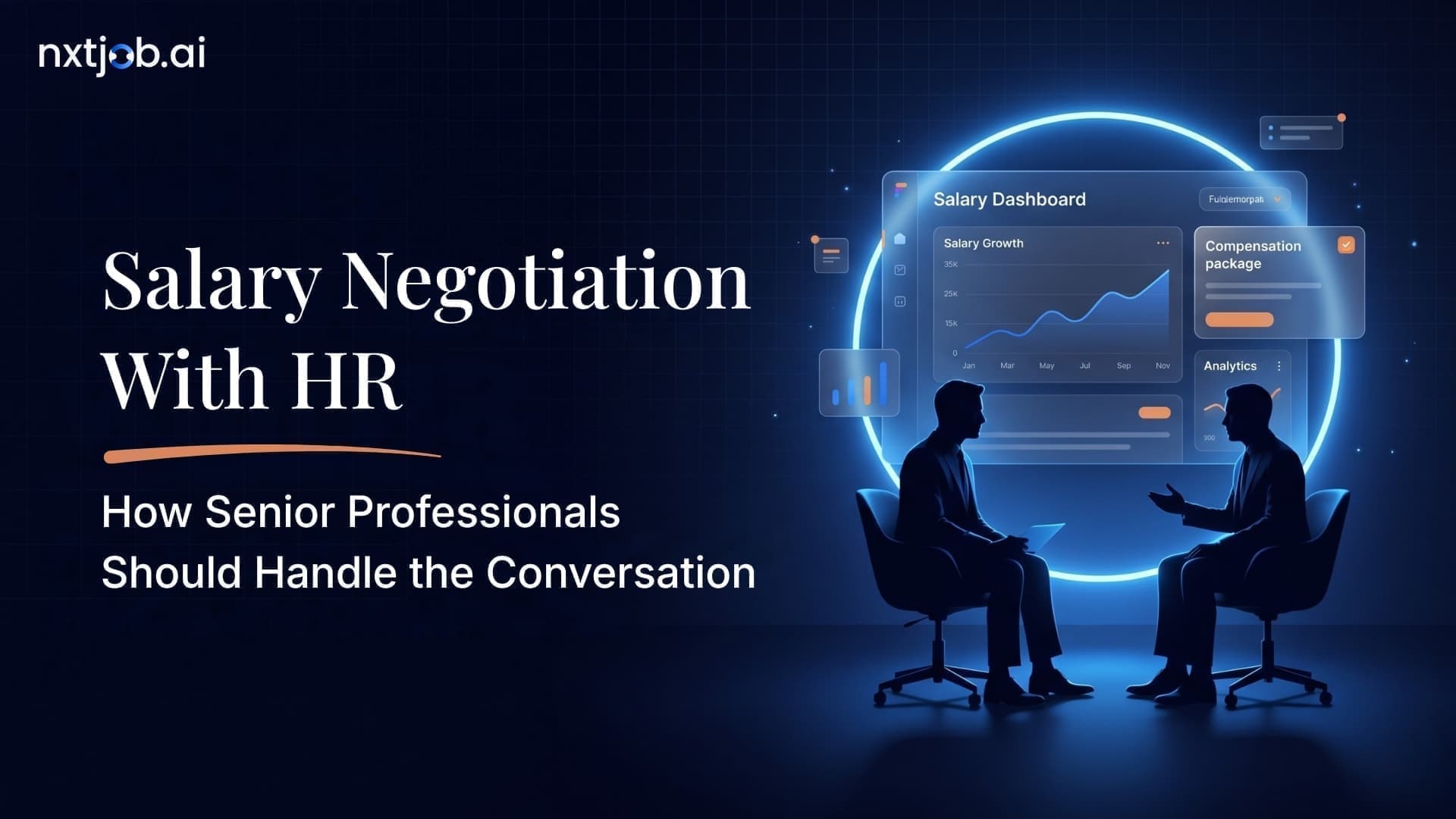
Salary Negotiation With HR: How Senior Professionals Should Handle the Conversation
Learn how senior professionals can handle salary negotiation with HR, respond to pushback, protect their value, and avoid underselling themselves.
Resume
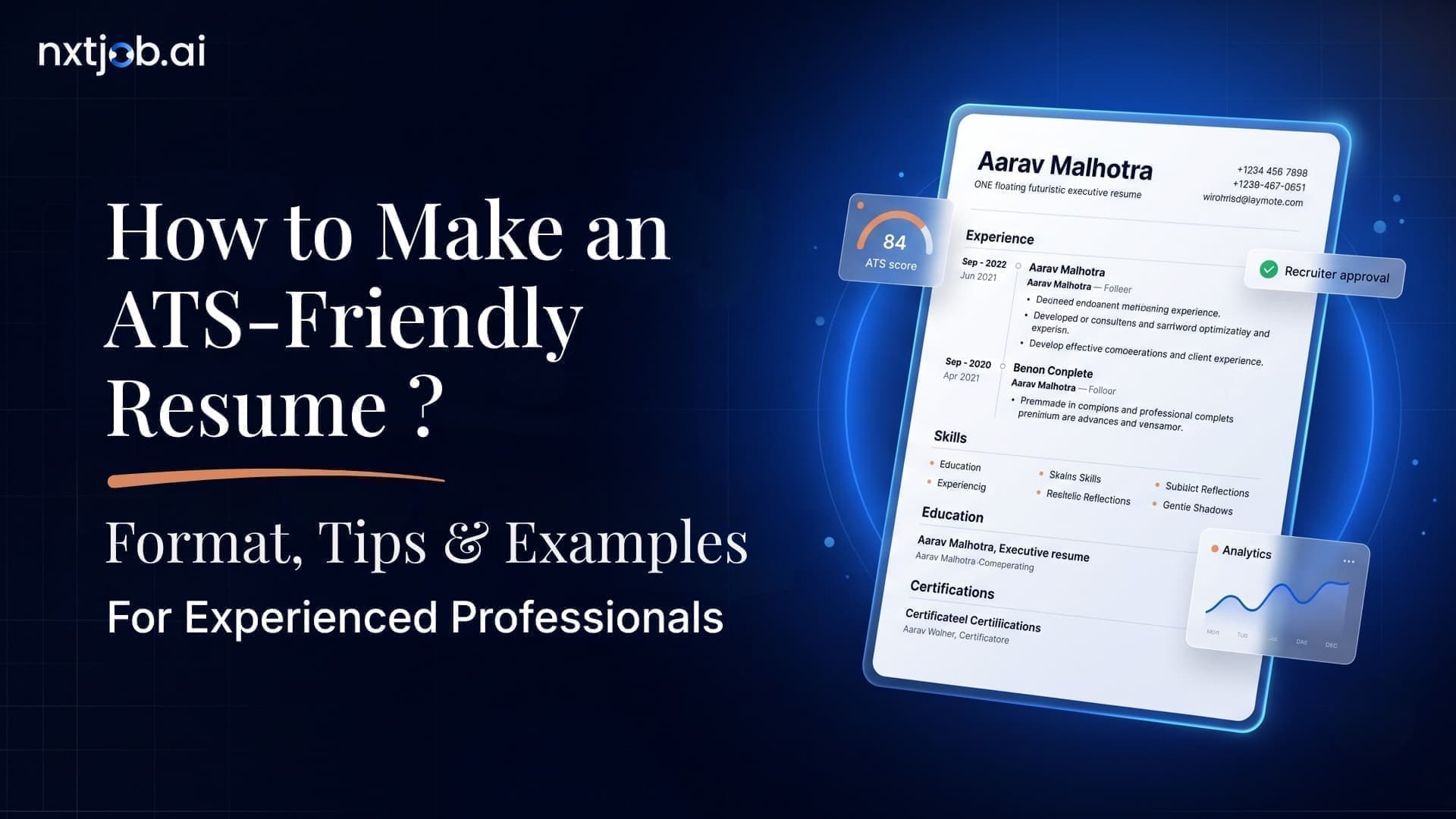
How to Make an ATS-Friendly Resume: Format, Tips, and Examples for Experienced Professionals
Learn how to make an ATS-friendly resume with the right format, keywords, structure, and role-specific details for experienced professionals.
As a co-founder and CEO of NxtJob.ai, I help mid and senior level professionals land 3-5 job offers within 3 months with a substantial salary hike. I am an Internationally Certified Career Coach, Resume Writing Expert, Job Interview and LinkedIn Strategist, and a Motivational Speaker.
Richik Sinha Roy
CEO, NxtJob
Everything you need to know
Here you can find solutions to all your queries.
Job search
5 min read
Why Senior Professionals Are Switching to AI-Powered Job Search Tools in 2025
Published Date:
|
Last Modified:
For a long time, experienced professionals followed a fairly simple playbook when they wanted a new role. Update the résumé. Apply on job portals. Wait. Follow up. Repeat.
It wasn’t exciting, but it worked. Or at least, it used to.
By 2025, that same approach doesn’t just feel dated. In many cases, it’s quietly hurting the search.
Hiring has shifted in ways most people didn’t fully notice until it was already too late. Recruiters now scan thousands of profiles in minutes. Résumés are filtered by systems long before a human recruiter ever gets involved. And many senior roles never even reach public job boards. They’re filled through referrals, internal networks, or data-led hiring tools that operate behind the scenes.
Which leads to an uncomfortable realization for many managers and leaders:
The job market evolved. Most professionals didn’t.
That gap is exactly why experienced professionals are turning to AI-powered job search tools. Not because it’s trendy. Not because it sounds impressive. But because it’s increasingly necessary.
The market moves faster than any individual can
In 2025, a single leadership opening can draw hundreds, sometimes thousands, of applications in days. Recruiters rely on automated screening, semantic matching, and scoring models just to stay afloat. Only a small fraction of candidates ever make it past that first filter.
AI tools help senior professionals keep pace by doing things humans simply can’t do consistently:
spotting roles before they’re publicly posted
flagging résumé gaps that automated systems penalize
adjusting language to align with how screening algorithms read experience
tracking shifts in demand across roles and industries in real time
Those who rely only on manual searching tend to get buried.
Those who use AI tend to surface earlier.
Senior careers require precision, not volume
At higher salary bands and seniority levels, the job search stops being about “finding something.” It becomes about fit. Scope. Influence. Growth. And, yes, compensation.
Mass applications rarely work here. They usually dilute positioning.
AI tools help narrow the focus by:
extracting clear value themes from complex career histories
identifying roles where experience has maximum leverage
highlighting companies hiring leaders due to org changes or strategic shifts
estimating interview conversion likelihood based on past data
It replaces guesswork with intention. And at senior levels, that matters more than effort.
Competing with AI means using AI
This part often gets overlooked.
Most companies now evaluate candidates using some combination of ATS systems, résumé parsers, skill-matching engines, and automated shortlisting tools. That means experience alone isn’t enough if it isn’t interpreted correctly by machines.
AI-powered job search tools help bridge that gap by:
restructuring résumés for ATS compatibility
ensuring skills and outcomes are clearly quantified
removing invisible blockers that reduce match scores
tailoring résumé versions to specific role requirements
At this point, it’s less about being qualified.
It’s about being readable.
The best roles are usually invisible
Many senior positions never appear on public portals at all. They emerge quietly through leadership changes, growth plans, or anticipated attrition.
AI helps uncover these by:
scanning thousands of sources simultaneously
tracking funding events, expansions, and executive movement
predicting where roles are likely to open next
advising when timing improves conversion odds
The smartest professionals aren’t necessarily applying more.
They’re applying at the right moment.
Time is a real constraint
Most experienced professionals aren’t job hunting full-time. They’re managing teams. Delivering outcomes. Balancing families and long-term financial goals.
Spending hours daily tweaking résumés and tracking applications isn’t realistic.
AI tools act like a quiet assistant in the background, helping with:
role discovery
skill mapping
application tracking
document optimization
interview preparation
salary benchmarking
It reduces friction without lowering standards.
Interviews are now data-driven too
Interviews still test confidence, but preparation has become far more analytical.
AI-based interview tools can:
analyze thousands of real interview questions
predict what you’re likely to be asked at your seniority level
evaluate answers for structure and impact
offer feedback on clarity and executive presence
That level of preparation shows, especially in leadership conversations where communication carries weight.
Better data leads to better negotiation
Negotiation is no longer about gut feel alone.
AI helps by:
benchmarking pay across roles, industries, and locations
tracking real-time market value for your skill set
suggesting effective counter-offers
identifying when an offer sits below market norms
With data, conversations change. Confidence increases. Outcomes improve.
Reinvention is becoming the norm
Perhaps the biggest shift is how often reinvention is required.
Managers move into new domains. Individual contributors step into leadership. Technical professionals adapt to AI-enabled roles. Senior leaders prepare for broader mandates.
AI supports this by identifying:
transferable strengths
meaningful skill gaps
high-return learning paths
future-resilient career directions
What once took months of experimentation can now happen in weeks, sometimes days.
The real divide isn’t AI vs humans
AI isn’t replacing senior professionals.
But senior professionals who use AI are steadily replacing those who don’t.
That’s why the fastest-growing group adopting AI job search tools isn’t fresh graduates. It’s experienced professionals who’ve learned, sometimes the hard way, that effort alone no longer wins.
Interview
Salary Negotiation With HR: How Senior Professionals Should Handle the Conversation
Learn how senior professionals can handle salary negotiation with HR, respond to pushback, protect their value, and avoid underselling themselves.
Resume
How to Make an ATS-Friendly Resume: Format, Tips, and Examples for Experienced Professionals
Learn how to make an ATS-friendly resume with the right format, keywords, structure, and role-specific details for experienced professionals.
As a co-founder and CEO of NxtJob.ai, I help mid and senior level professionals land 3-5 job offers within 3 months with a substantial salary hike. I am an Internationally Certified Career Coach, Resume Writing Expert, Job Interview and LinkedIn Strategist, and a Motivational Speaker.
Richik Sinha Roy
CEO, NxtJob
Recent articles
Resume
5 min read
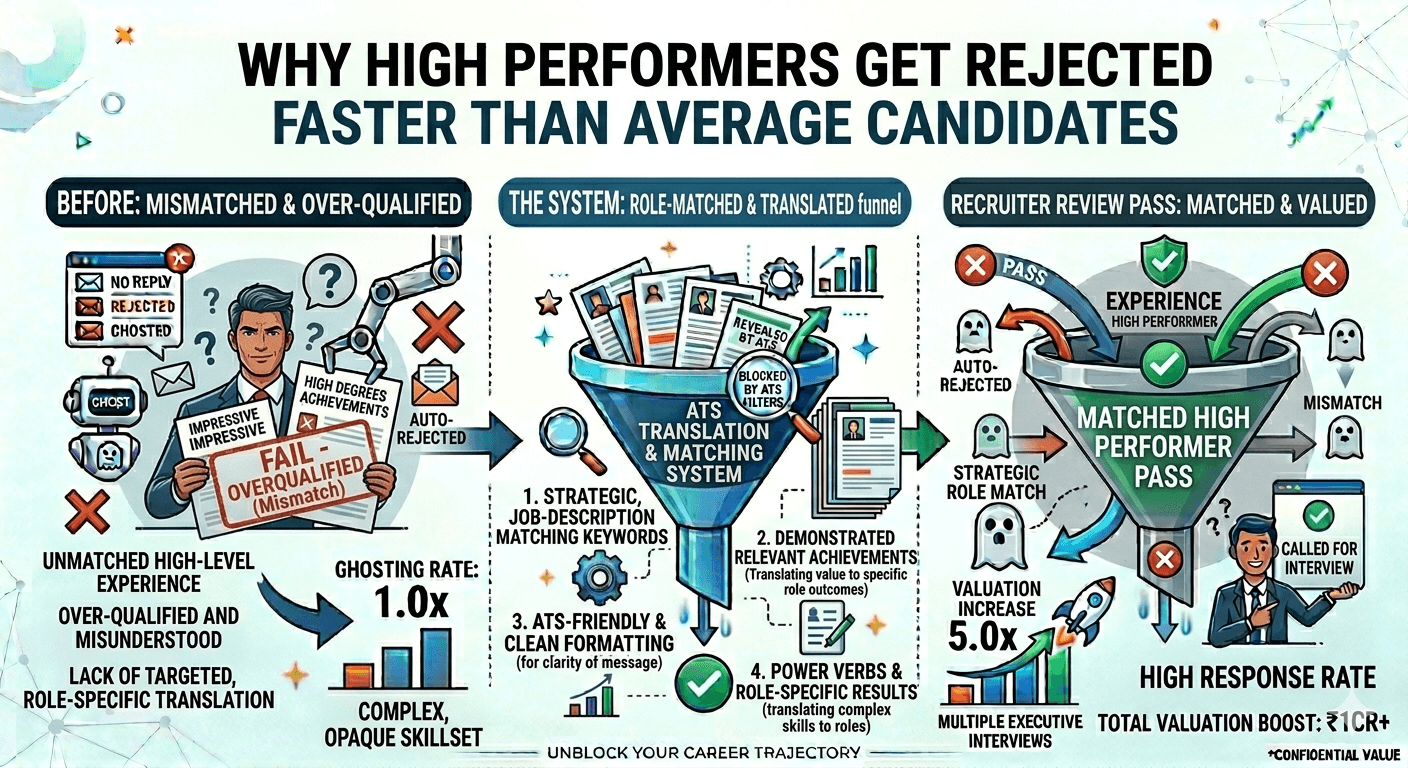
Why High Performers Get Rejected Faster Than Average Candidates
Why High Performers Get Rejected Faster Than Average Candidates
Resume
5 min read
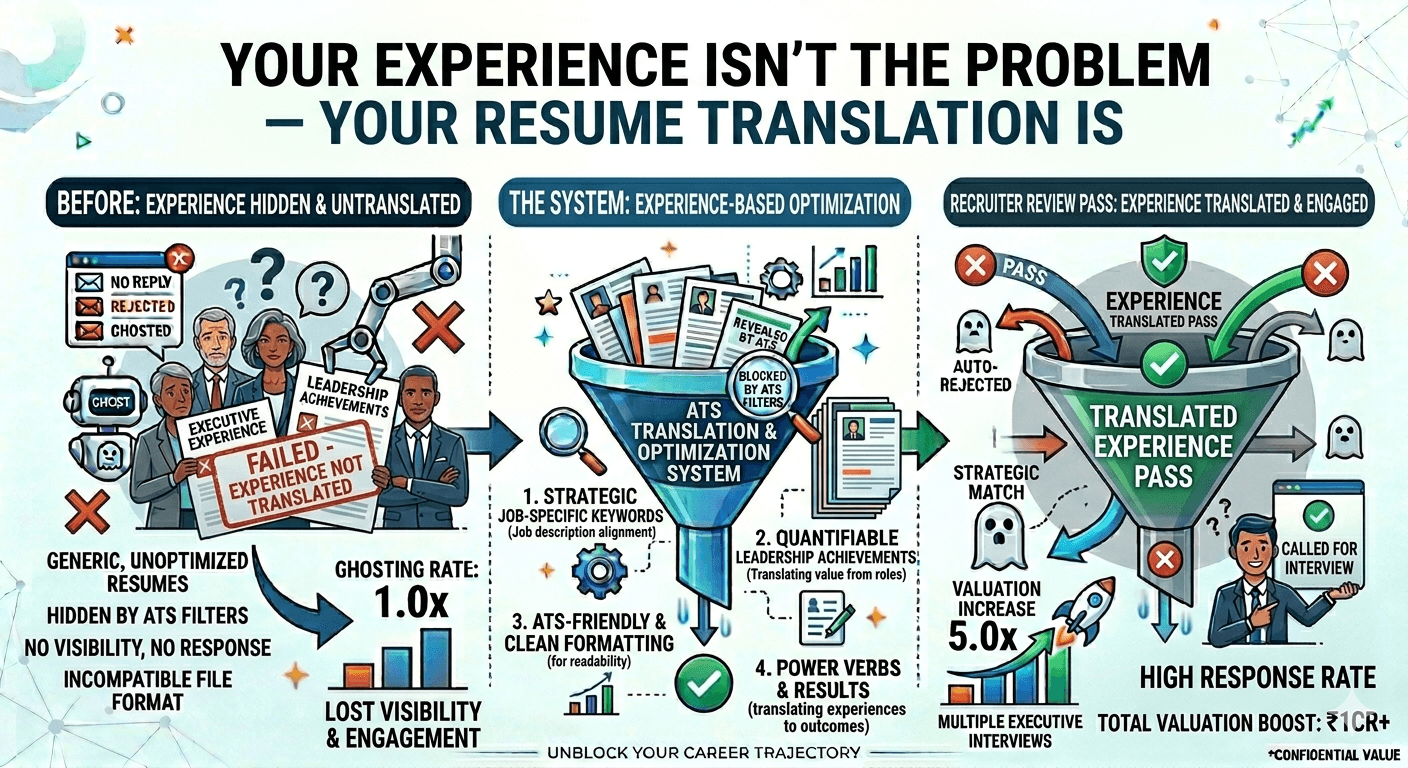
Your Experience Isn’t the Problem, Your Resume Translation Is
Struggling to get interviews despite strong experience? Discover how an ATS Resume Checker reveals hidden resume gaps and helps you translate your experience into results that recruiters actually notice.
Resume
5 min read
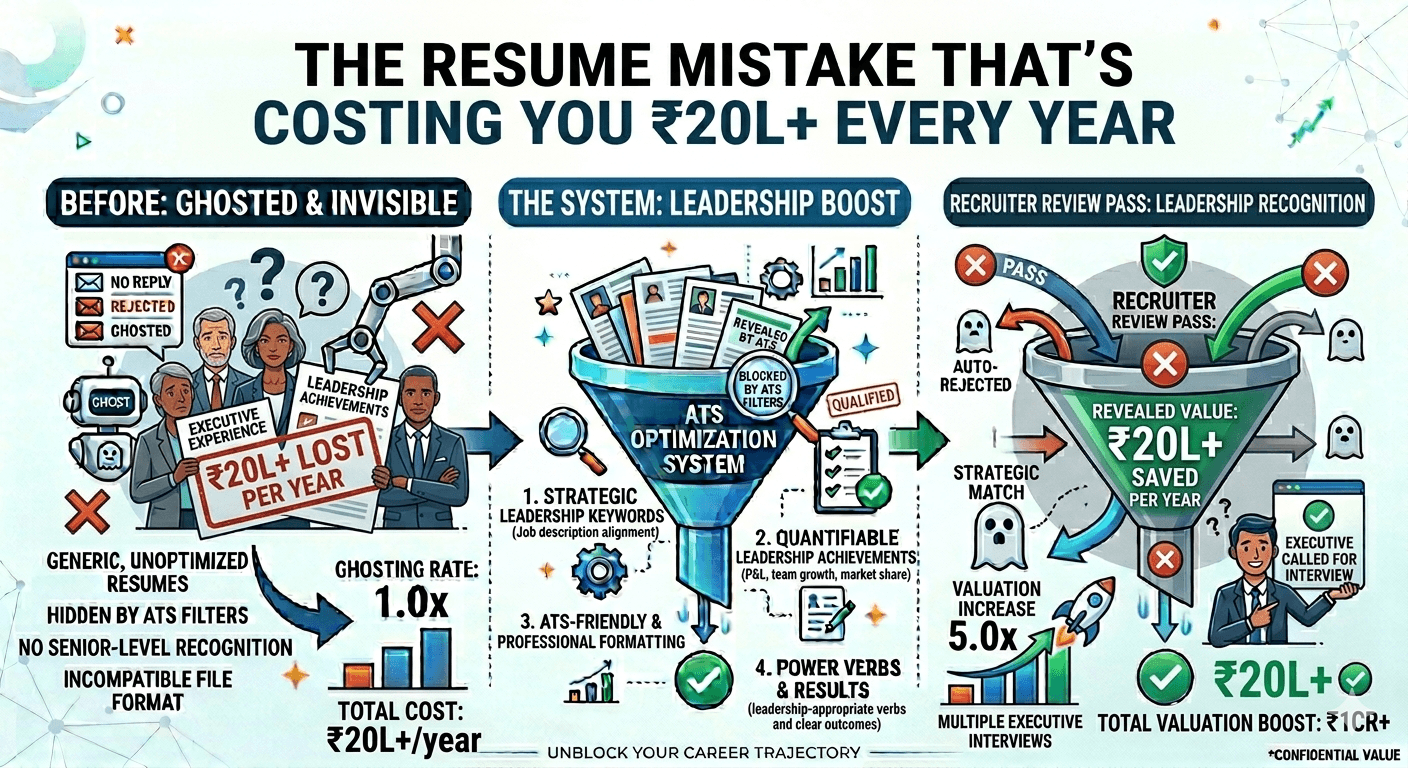
The Resume Mistake That’s Costing You ₹20L+ Every Year
The Resume Mistake That’s Costing You ₹20L+ Every Year
Resume
5 min read
Why High Performers Get Rejected Faster Than Average Candidates
Why High Performers Get Rejected Faster Than Average Candidates
Resume
5 min read
Your Experience Isn’t the Problem, Your Resume Translation Is
Struggling to get interviews despite strong experience? Discover how an ATS Resume Checker reveals hidden resume gaps and helps you translate your experience into results that recruiters actually notice.
Everything you need to know
Here you can find solutions to all your queries.
Join the Revolution
Your AI career copilot to land you top jobs in under 90 days.
Join the Revolution
Your AI career copilot to land you top jobs in under 90 days.
Join the Revolution
Your AI career copilot to land you top jobs in under 90 days.