
Interview
5 min read
What is the 70/30 Rule in Negotiation?
Published Date:
|
Last Modified:

If you’re in your 30s or 40s, working in a mid-senior role in India, chances are you’ve been part of countless negotiations—salary discussions, client deals, vendor contracts, or even internal team debates. And if you reflect honestly, you’ll notice something: most professionals talk more than they listen when stakes are high.
We assume negotiation is about proving our point, filling the silence, and “convincing” the other person. But in reality, the best negotiators often say less. That’s where the 70/30 rule of negotiation comes in. It’s a simple but powerful principle: spend 70% of the time listening and only 30% talking.
This isn’t just theory—it’s a skill that separates professionals who merely push numbers from those who close deals, build trust, and command respect.
What Exactly is the 70/30 Rule?
The 70/30 rule means you should spend 70% of your time listening, observing, and asking smart questions during a negotiation, and only 30% presenting your case or counter-offer.
It flips the usual mindset. Instead of treating negotiation as a battle of words, it treats it as a process of discovery. By listening more, you uncover the other side’s priorities, pain points, and flexibility. Once you know that, your 30% contribution can be precise and impactful, rather than long-winded and defensive.
Think of it like cricket. A good batsman doesn’t swing at every ball—he waits for the right delivery to hit. The 70/30 rule ensures you don’t waste your shots.
Why the 70/30 Rule Works in Negotiations
Many mid-senior professionals underestimate the power of silence and listening. Here’s why the rule works so well in practice:
People Reveal More Than They Realize
When you let the employer, client, or counterpart talk, they often reveal budget limits, priorities, or flexibility areas. For example, an HR might say, “Our base pay is fixed, but we can look at performance bonuses.” If you’d kept talking, you’d miss that clue.Builds Trust and Respect
In Indian corporate culture, where hierarchy often influences discussions, being a good listener makes you stand out. It signals maturity, patience, and confidence—traits senior leaders respect.Reduces Emotional Pressure
Talking less keeps you calm. When you over-explain, you may sound defensive. When you pause and listen, you maintain control and project confidence.Helps You Craft a Tailored Response
Instead of throwing random numbers or conditions, your 30% speaking time becomes strategic. You can directly link your ask to what matters most to the other side.
How Mid-Senior Professionals Can Apply the 70/30 Rule
1. Enter With Prepared Questions
Before the conversation, prepare 4–5 thoughtful questions. For example, in a salary negotiation:
“Can you share how the compensation structure is designed for this role?”
“What factors are most important for the leadership team when deciding on final offers?”
In a client deal:
“What are the biggest challenges you’re facing with your current vendor?”
“Which part of the solution matters more to you—cost efficiency or speed of execution?”
Asking questions ensures the other person does most of the talking while giving you valuable intel.
2. Practice Strategic Pauses
Most professionals jump in to fill silence. Don’t. Silence is powerful. When you pause after making a point, HR or the client often continues talking to justify their position—giving you more insights.
3. Summarize to Show Understanding
Listening doesn’t mean nodding passively. Use phrases like:
“If I understand correctly, your main concern is…”
“So what you’re saying is…”
This not only proves you’re paying attention but also gives them a chance to correct or clarify, saving you from missteps.
4. Save Your 30% for Impact
When it’s your turn, don’t dilute your message with fluff. State your case clearly and confidently:
“Based on my 12 years in scaling IT operations and the impact I’ve delivered in cost optimization, I believe a compensation of 38 LPA fairly reflects the value I bring.”
Short, strong, and backed by logic.
Common Mistakes to Avoid With the 70/30 Rule
Asking Questions Like an Interrogator
Remember, you’re building a conversation, not running a police investigation. Tone and warmth matter.Nodding Without Taking Notes
Active listening means capturing details. If you forget key points, your later arguments will feel disconnected.Wasting Your 30% on Just Numbers
Don’t make your limited speaking time about “I want X lakhs.” Instead, link your number to impact, value, and market benchmarks.Overcompensating With Silence
70/30 doesn’t mean staying mute. If you don’t guide the conversation with the right questions, the discussion can meander.
Real-World Example: Salary Negotiation in India
Imagine you’ve been offered ₹28 LPA for a senior product manager role in Bangalore. You were expecting around ₹33–34 LPA.
Instead of jumping in with “I was expecting at least 34,” you use the 70/30 rule:
You ask HR: “Can you help me understand how you arrived at this number?”
They reveal: “We’ve benchmarked against internal parity, and most PMs at your level are in the 26–29 range. However, we can explore a joining bonus if needed.”
Now, in your 30% time, you respond: “That makes sense. Given my background in scaling fintech products and the leadership experience I bring, I was targeting closer to 33. If the base can’t stretch, would you be open to bridging that gap with a signing bonus or performance-linked component?”
See the difference? You’re not fighting—you’re aligning. That’s the power of 70/30.
Why This Rule is Even More Relevant for Indian Mid-Senior Professionals
At mid-senior levels, you’re no longer being judged just on technical expertise. You’re being assessed on judgment, communication skills, and leadership maturity.
How you negotiate is often seen as a preview of how you’ll handle clients, vendors, or boardroom discussions. A loud, pushy negotiator looks insecure. A calm, listening-focused negotiator looks like a leader.
Final Thoughts: The Quiet Strength of Listening
The 70/30 rule in negotiation is less about math and more about mindset. It’s about realizing that power in negotiation doesn’t come from dominating the conversation—it comes from controlling the flow, extracting insights, and making precise, well-timed interventions.
For mid-senior professionals in India, mastering this approach can mean the difference between leaving money on the table and walking away with a package or deal that truly reflects your value.
Remember this: the smartest negotiators win not by speaking the loudest, but by listening the deepest.

As a co-founder and CEO of NxtJob.ai, I help mid and senior level professionals land 3-5 job offers within 3 months with a substantial salary hike. I am an Internationally Certified Career Coach, Resume Writing Expert, Job Interview and LinkedIn Strategist, and a Motivational Speaker.
Richik Sinha Roy
CEO, NxtJob
Recent articles

Resume
5 min read
ATS Resume Format: How to Create a Resume That Gets Past Applicant Tracking Systems
Learn how to create an ATS-friendly resume that passes through applicant tracking systems and increases your chances of landing an interview.
Resume
5 min read
ATS Resume Format: How to Create a Resume That Gets Past Applicant Tracking Systems
Learn how to create an ATS-friendly resume that passes through applicant tracking systems and increases your chances of landing an interview.
Resume
5 min read
ATS Resume Format: How to Create a Resume That Gets Past Applicant Tracking Systems
Learn how to create an ATS-friendly resume that passes through applicant tracking systems and increases your chances of landing an interview.
Resume
5 min read
ATS Resume Format: How to Create a Resume That Gets Past Applicant Tracking Systems
Learn how to create an ATS-friendly resume that passes through applicant tracking systems and increases your chances of landing an interview.
Resume
5 min read
ATS Resume Format: How to Create a Resume That Gets Past Applicant Tracking Systems
Learn how to create an ATS-friendly resume that passes through applicant tracking systems and increases your chances of landing an interview.
Resume
5 min read
ATS Resume Format: How to Create a Resume That Gets Past Applicant Tracking Systems
Learn how to create an ATS-friendly resume that passes through applicant tracking systems and increases your chances of landing an interview.
Everything you need to know
Here you can find solutions to all your queries.
What exactly does the 70/30 rule mean in negotiation?
Why is the 70/30 rule important for mid-senior professionals in India?
Can listening too much make me look passive or weak in negotiations?
How do I balance the 70/30 rule in a salary negotiation with HR?
Can the 70/30 rule be applied outside salary discussions?
Interview
5 min read
What is the 70/30 Rule in Negotiation?
Published Date:
|
Last Modified:
If you’re in your 30s or 40s, working in a mid-senior role in India, chances are you’ve been part of countless negotiations—salary discussions, client deals, vendor contracts, or even internal team debates. And if you reflect honestly, you’ll notice something: most professionals talk more than they listen when stakes are high.
We assume negotiation is about proving our point, filling the silence, and “convincing” the other person. But in reality, the best negotiators often say less. That’s where the 70/30 rule of negotiation comes in. It’s a simple but powerful principle: spend 70% of the time listening and only 30% talking.
This isn’t just theory—it’s a skill that separates professionals who merely push numbers from those who close deals, build trust, and command respect.
What Exactly is the 70/30 Rule?
The 70/30 rule means you should spend 70% of your time listening, observing, and asking smart questions during a negotiation, and only 30% presenting your case or counter-offer.
It flips the usual mindset. Instead of treating negotiation as a battle of words, it treats it as a process of discovery. By listening more, you uncover the other side’s priorities, pain points, and flexibility. Once you know that, your 30% contribution can be precise and impactful, rather than long-winded and defensive.
Think of it like cricket. A good batsman doesn’t swing at every ball—he waits for the right delivery to hit. The 70/30 rule ensures you don’t waste your shots.
Why the 70/30 Rule Works in Negotiations
Many mid-senior professionals underestimate the power of silence and listening. Here’s why the rule works so well in practice:
People Reveal More Than They Realize
When you let the employer, client, or counterpart talk, they often reveal budget limits, priorities, or flexibility areas. For example, an HR might say, “Our base pay is fixed, but we can look at performance bonuses.” If you’d kept talking, you’d miss that clue.Builds Trust and Respect
In Indian corporate culture, where hierarchy often influences discussions, being a good listener makes you stand out. It signals maturity, patience, and confidence—traits senior leaders respect.Reduces Emotional Pressure
Talking less keeps you calm. When you over-explain, you may sound defensive. When you pause and listen, you maintain control and project confidence.Helps You Craft a Tailored Response
Instead of throwing random numbers or conditions, your 30% speaking time becomes strategic. You can directly link your ask to what matters most to the other side.
How Mid-Senior Professionals Can Apply the 70/30 Rule
1. Enter With Prepared Questions
Before the conversation, prepare 4–5 thoughtful questions. For example, in a salary negotiation:
“Can you share how the compensation structure is designed for this role?”
“What factors are most important for the leadership team when deciding on final offers?”
In a client deal:
“What are the biggest challenges you’re facing with your current vendor?”
“Which part of the solution matters more to you—cost efficiency or speed of execution?”
Asking questions ensures the other person does most of the talking while giving you valuable intel.
2. Practice Strategic Pauses
Most professionals jump in to fill silence. Don’t. Silence is powerful. When you pause after making a point, HR or the client often continues talking to justify their position—giving you more insights.
3. Summarize to Show Understanding
Listening doesn’t mean nodding passively. Use phrases like:
“If I understand correctly, your main concern is…”
“So what you’re saying is…”
This not only proves you’re paying attention but also gives them a chance to correct or clarify, saving you from missteps.
4. Save Your 30% for Impact
When it’s your turn, don’t dilute your message with fluff. State your case clearly and confidently:
“Based on my 12 years in scaling IT operations and the impact I’ve delivered in cost optimization, I believe a compensation of 38 LPA fairly reflects the value I bring.”
Short, strong, and backed by logic.
Common Mistakes to Avoid With the 70/30 Rule
Asking Questions Like an Interrogator
Remember, you’re building a conversation, not running a police investigation. Tone and warmth matter.Nodding Without Taking Notes
Active listening means capturing details. If you forget key points, your later arguments will feel disconnected.Wasting Your 30% on Just Numbers
Don’t make your limited speaking time about “I want X lakhs.” Instead, link your number to impact, value, and market benchmarks.Overcompensating With Silence
70/30 doesn’t mean staying mute. If you don’t guide the conversation with the right questions, the discussion can meander.
Real-World Example: Salary Negotiation in India
Imagine you’ve been offered ₹28 LPA for a senior product manager role in Bangalore. You were expecting around ₹33–34 LPA.
Instead of jumping in with “I was expecting at least 34,” you use the 70/30 rule:
You ask HR: “Can you help me understand how you arrived at this number?”
They reveal: “We’ve benchmarked against internal parity, and most PMs at your level are in the 26–29 range. However, we can explore a joining bonus if needed.”
Now, in your 30% time, you respond: “That makes sense. Given my background in scaling fintech products and the leadership experience I bring, I was targeting closer to 33. If the base can’t stretch, would you be open to bridging that gap with a signing bonus or performance-linked component?”
See the difference? You’re not fighting—you’re aligning. That’s the power of 70/30.
Why This Rule is Even More Relevant for Indian Mid-Senior Professionals
At mid-senior levels, you’re no longer being judged just on technical expertise. You’re being assessed on judgment, communication skills, and leadership maturity.
How you negotiate is often seen as a preview of how you’ll handle clients, vendors, or boardroom discussions. A loud, pushy negotiator looks insecure. A calm, listening-focused negotiator looks like a leader.
Final Thoughts: The Quiet Strength of Listening
The 70/30 rule in negotiation is less about math and more about mindset. It’s about realizing that power in negotiation doesn’t come from dominating the conversation—it comes from controlling the flow, extracting insights, and making precise, well-timed interventions.
For mid-senior professionals in India, mastering this approach can mean the difference between leaving money on the table and walking away with a package or deal that truly reflects your value.
Remember this: the smartest negotiators win not by speaking the loudest, but by listening the deepest.
Table of content

Interview
Salary Negotiation With HR: How Senior Professionals Should Handle the Conversation
Learn how senior professionals can handle salary negotiation with HR, respond to pushback, protect their value, and avoid underselling themselves.
Resume
How to Make an ATS-Friendly Resume: Format, Tips, and Examples for Experienced Professionals
Learn how to make an ATS-friendly resume with the right format, keywords, structure, and role-specific details for experienced professionals.
As a co-founder and CEO of NxtJob.ai, I help mid and senior level professionals land 3-5 job offers within 3 months with a substantial salary hike. I am an Internationally Certified Career Coach, Resume Writing Expert, Job Interview and LinkedIn Strategist, and a Motivational Speaker.
Richik Sinha Roy
CEO, NxtJob
What exactly does the 70/30 rule mean in negotiation?
Why is the 70/30 rule important for mid-senior professionals in India?
Can listening too much make me look passive or weak in negotiations?
How do I balance the 70/30 rule in a salary negotiation with HR?
Can the 70/30 rule be applied outside salary discussions?
Everything you need to know
Here you can find solutions to all your queries.
Interview
5 min read
What is the 70/30 Rule in Negotiation?
Published Date:
|
Last Modified:
If you’re in your 30s or 40s, working in a mid-senior role in India, chances are you’ve been part of countless negotiations—salary discussions, client deals, vendor contracts, or even internal team debates. And if you reflect honestly, you’ll notice something: most professionals talk more than they listen when stakes are high.
We assume negotiation is about proving our point, filling the silence, and “convincing” the other person. But in reality, the best negotiators often say less. That’s where the 70/30 rule of negotiation comes in. It’s a simple but powerful principle: spend 70% of the time listening and only 30% talking.
This isn’t just theory—it’s a skill that separates professionals who merely push numbers from those who close deals, build trust, and command respect.
What Exactly is the 70/30 Rule?
The 70/30 rule means you should spend 70% of your time listening, observing, and asking smart questions during a negotiation, and only 30% presenting your case or counter-offer.
It flips the usual mindset. Instead of treating negotiation as a battle of words, it treats it as a process of discovery. By listening more, you uncover the other side’s priorities, pain points, and flexibility. Once you know that, your 30% contribution can be precise and impactful, rather than long-winded and defensive.
Think of it like cricket. A good batsman doesn’t swing at every ball—he waits for the right delivery to hit. The 70/30 rule ensures you don’t waste your shots.
Why the 70/30 Rule Works in Negotiations
Many mid-senior professionals underestimate the power of silence and listening. Here’s why the rule works so well in practice:
People Reveal More Than They Realize
When you let the employer, client, or counterpart talk, they often reveal budget limits, priorities, or flexibility areas. For example, an HR might say, “Our base pay is fixed, but we can look at performance bonuses.” If you’d kept talking, you’d miss that clue.Builds Trust and Respect
In Indian corporate culture, where hierarchy often influences discussions, being a good listener makes you stand out. It signals maturity, patience, and confidence—traits senior leaders respect.Reduces Emotional Pressure
Talking less keeps you calm. When you over-explain, you may sound defensive. When you pause and listen, you maintain control and project confidence.Helps You Craft a Tailored Response
Instead of throwing random numbers or conditions, your 30% speaking time becomes strategic. You can directly link your ask to what matters most to the other side.
How Mid-Senior Professionals Can Apply the 70/30 Rule
1. Enter With Prepared Questions
Before the conversation, prepare 4–5 thoughtful questions. For example, in a salary negotiation:
“Can you share how the compensation structure is designed for this role?”
“What factors are most important for the leadership team when deciding on final offers?”
In a client deal:
“What are the biggest challenges you’re facing with your current vendor?”
“Which part of the solution matters more to you—cost efficiency or speed of execution?”
Asking questions ensures the other person does most of the talking while giving you valuable intel.
2. Practice Strategic Pauses
Most professionals jump in to fill silence. Don’t. Silence is powerful. When you pause after making a point, HR or the client often continues talking to justify their position—giving you more insights.
3. Summarize to Show Understanding
Listening doesn’t mean nodding passively. Use phrases like:
“If I understand correctly, your main concern is…”
“So what you’re saying is…”
This not only proves you’re paying attention but also gives them a chance to correct or clarify, saving you from missteps.
4. Save Your 30% for Impact
When it’s your turn, don’t dilute your message with fluff. State your case clearly and confidently:
“Based on my 12 years in scaling IT operations and the impact I’ve delivered in cost optimization, I believe a compensation of 38 LPA fairly reflects the value I bring.”
Short, strong, and backed by logic.
Common Mistakes to Avoid With the 70/30 Rule
Asking Questions Like an Interrogator
Remember, you’re building a conversation, not running a police investigation. Tone and warmth matter.Nodding Without Taking Notes
Active listening means capturing details. If you forget key points, your later arguments will feel disconnected.Wasting Your 30% on Just Numbers
Don’t make your limited speaking time about “I want X lakhs.” Instead, link your number to impact, value, and market benchmarks.Overcompensating With Silence
70/30 doesn’t mean staying mute. If you don’t guide the conversation with the right questions, the discussion can meander.
Real-World Example: Salary Negotiation in India
Imagine you’ve been offered ₹28 LPA for a senior product manager role in Bangalore. You were expecting around ₹33–34 LPA.
Instead of jumping in with “I was expecting at least 34,” you use the 70/30 rule:
You ask HR: “Can you help me understand how you arrived at this number?”
They reveal: “We’ve benchmarked against internal parity, and most PMs at your level are in the 26–29 range. However, we can explore a joining bonus if needed.”
Now, in your 30% time, you respond: “That makes sense. Given my background in scaling fintech products and the leadership experience I bring, I was targeting closer to 33. If the base can’t stretch, would you be open to bridging that gap with a signing bonus or performance-linked component?”
See the difference? You’re not fighting—you’re aligning. That’s the power of 70/30.
Why This Rule is Even More Relevant for Indian Mid-Senior Professionals
At mid-senior levels, you’re no longer being judged just on technical expertise. You’re being assessed on judgment, communication skills, and leadership maturity.
How you negotiate is often seen as a preview of how you’ll handle clients, vendors, or boardroom discussions. A loud, pushy negotiator looks insecure. A calm, listening-focused negotiator looks like a leader.
Final Thoughts: The Quiet Strength of Listening
The 70/30 rule in negotiation is less about math and more about mindset. It’s about realizing that power in negotiation doesn’t come from dominating the conversation—it comes from controlling the flow, extracting insights, and making precise, well-timed interventions.
For mid-senior professionals in India, mastering this approach can mean the difference between leaving money on the table and walking away with a package or deal that truly reflects your value.
Remember this: the smartest negotiators win not by speaking the loudest, but by listening the deepest.
Table of content
Interview
Salary Negotiation With HR: How Senior Professionals Should Handle the Conversation
Learn how senior professionals can handle salary negotiation with HR, respond to pushback, protect their value, and avoid underselling themselves.
Resume
How to Make an ATS-Friendly Resume: Format, Tips, and Examples for Experienced Professionals
Learn how to make an ATS-friendly resume with the right format, keywords, structure, and role-specific details for experienced professionals.
As a co-founder and CEO of NxtJob.ai, I help mid and senior level professionals land 3-5 job offers within 3 months with a substantial salary hike. I am an Internationally Certified Career Coach, Resume Writing Expert, Job Interview and LinkedIn Strategist, and a Motivational Speaker.
Richik Sinha Roy
CEO, NxtJob
Recent articles

Resume
5 min read
Why High Performers Get Rejected Faster Than Average Candidates
Why High Performers Get Rejected Faster Than Average Candidates
Resume
5 min read
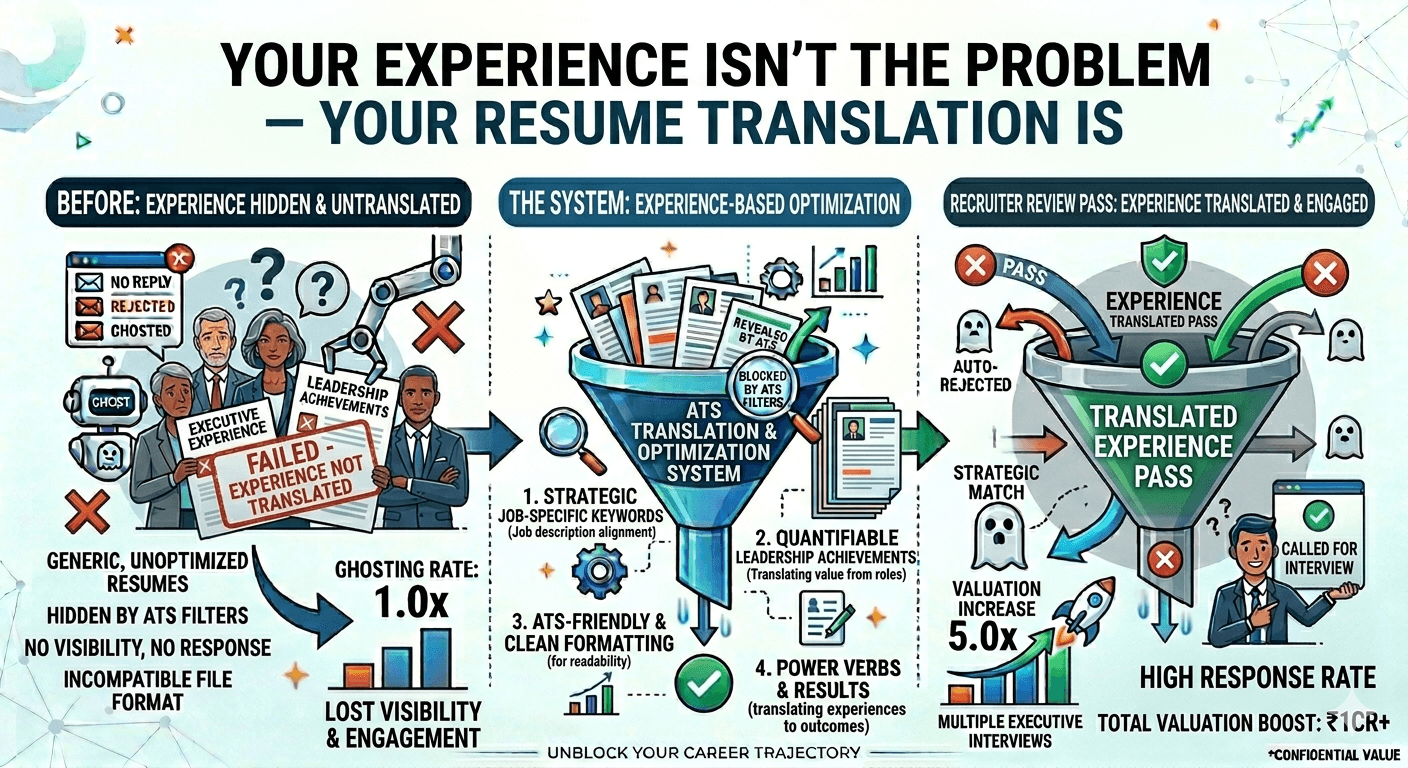
Your Experience Isn’t the Problem, Your Resume Translation Is
Struggling to get interviews despite strong experience? Discover how an ATS Resume Checker reveals hidden resume gaps and helps you translate your experience into results that recruiters actually notice.
Resume
5 min read
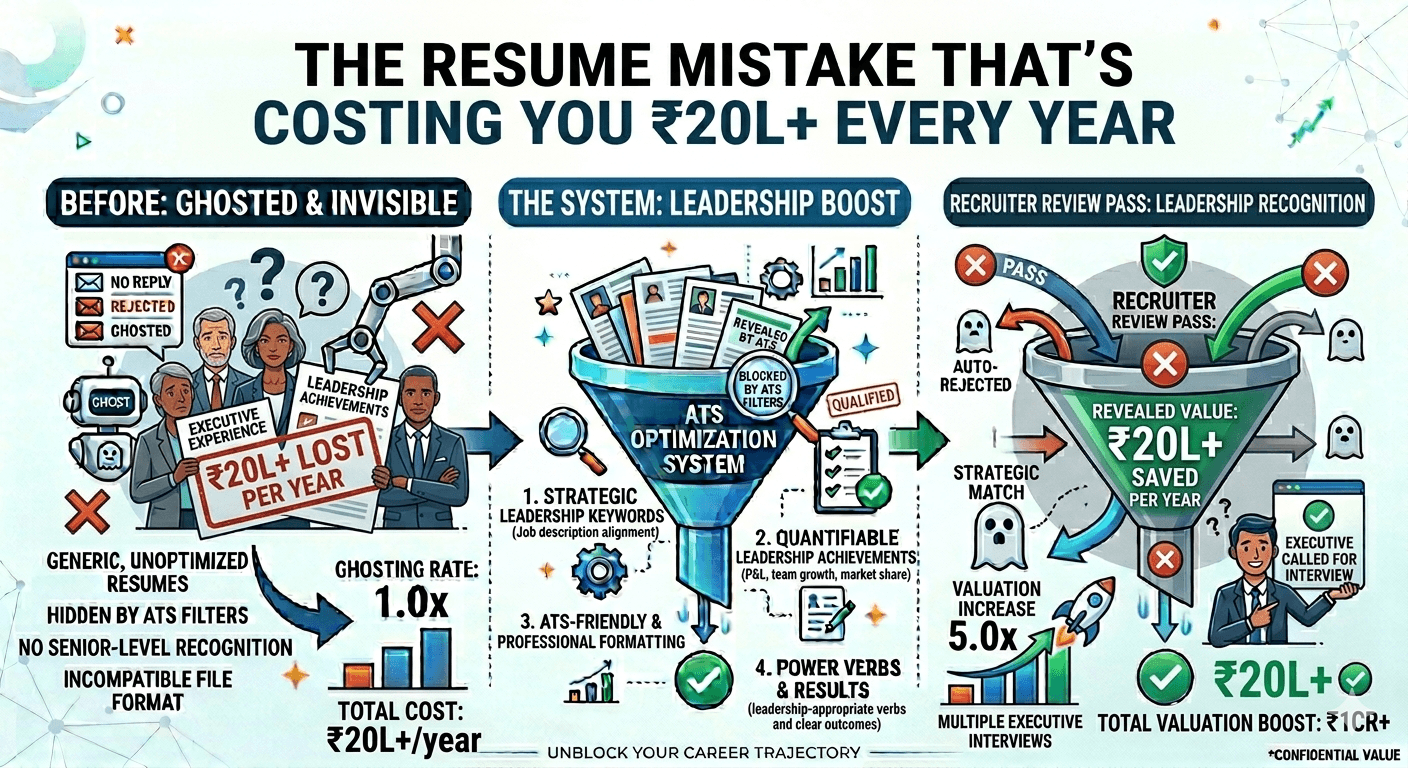
The Resume Mistake That’s Costing You ₹20L+ Every Year
The Resume Mistake That’s Costing You ₹20L+ Every Year
Resume
5 min read
Why High Performers Get Rejected Faster Than Average Candidates
Why High Performers Get Rejected Faster Than Average Candidates
Resume
5 min read
Your Experience Isn’t the Problem, Your Resume Translation Is
Struggling to get interviews despite strong experience? Discover how an ATS Resume Checker reveals hidden resume gaps and helps you translate your experience into results that recruiters actually notice.
Everything you need to know
Here you can find solutions to all your queries.
What exactly does the 70/30 rule mean in negotiation?
Why is the 70/30 rule important for mid-senior professionals in India?
Can listening too much make me look passive or weak in negotiations?
How do I balance the 70/30 rule in a salary negotiation with HR?
Can the 70/30 rule be applied outside salary discussions?
Join the Revolution
Your AI career copilot to land you top jobs in under 90 days.
Join the Revolution
Your AI career copilot to land you top jobs in under 90 days.
Join the Revolution
Your AI career copilot to land you top jobs in under 90 days.