
Job search
5 min read
How Often Should You Change Jobs to Maximize Your Salary?
Published Date:
|
Last Modified:

If you’ve been working for about 7–15 years, chances are you’ve already asked yourself whether you should stick around in your current role or jump ship to secure a higher salary. In India’s fast-evolving job market—especially in sectors like IT, consulting, finance, and startups—this is not just a passing thought. It’s a real, strategic decision that could either catapult your income to the next level or leave you with a resume that makes hiring managers nervous.
I’m going to walk you through this as if I’m your older brother, who’s seen a fair share of appraisals, counteroffers, and recruiter calls. This isn’t about theoretical advice you find in textbooks. This is about how you, as an Indian professional in mid-senior management, can time your moves to grow your salary without looking flaky or sabotaging long-term career growth.
Let’s dig in.
Why Job Changes Are Crucial for Salary Growth in India
Before we talk frequency, let’s get one thing clear: In India, annual salary increments tend to be modest, especially if you stay with the same employer for too long. Unless you’re in a high-demand niche or your company is scaling aggressively, typical raises hover between 6%–10%. Occasionally, you might see higher bumps if your company did exceptionally well or if you get promoted.
But here’s the kicker—changing jobs can often net you a 20%–40% hike in a single move. That’s not an exaggeration. In fact, for many professionals I’ve mentored, switching companies was the single biggest lever they had to reach an 8-figure CTC.
Some of the most common reasons Indian mid-senior professionals consider moving:
Their salary has lagged behind market standards due to years of low hikes
The company has a slow promotion cycle or rigid pay bands
They want exposure to different industries, technologies, or roles
They’re looking to break the glass ceiling of mid-management
Understanding this context is vital. Because while loyalty has its place, staying too long in one company often caps your earning potential in India’s competitive market.
So, How Often Should You Change Jobs?
There’s no perfect formula that fits everyone. But generally speaking, most career experts (and experienced professionals) recommend:
Changing jobs every 3–4 years early in your career, and then every 4–6 years in mid-senior roles, IF your compensation is stagnating or your learning curve has plateaued.
Let’s break that down a bit more practically:
Years 0–5: It’s okay to move every 2–3 years as you explore what fits you best and ramp up your base salary. Early-career switches are quite common and less likely to raise eyebrows.
Years 5–10: Here, it helps to stay at least 3–4 years in a role to demonstrate stability and show results. At this stage, frequent moves can make you look restless.
Years 10–15: For mid-senior management, 4–6 years per organization is often the sweet spot. You’ve had time to deliver impact and build credibility, but you’re still agile enough to command substantial hikes when moving.
One thing to remember: The first 2 years in any job are usually about learning and establishing trust. If you leave before that, you might find it harder to get strong recommendations or claim measurable impact.
The Risks of Switching Too Often
Before you start plotting a job change every couple of years, let’s be real about the flip side. In India, recruiters and HR leaders are increasingly cautious about “frequent movers.”
If you hop every 1–2 years repeatedly, it can signal:
Lack of commitment or inability to work through challenges
A “grass is greener” mindset that could continue in the future
Risk for the employer, who will invest in your onboarding and training
So think of it this way: If you’re moving, there should be a compelling story—either you’re stepping up in responsibility, shifting industries, or dramatically improving compensation.
Otherwise, you could find your resume getting passed over despite your experience.
How to Know It’s Time to Change Jobs
If you’re unsure whether it’s the right moment to look for something new, ask yourself these questions:
Is my compensation in line with market benchmarks?
Check salary surveys (like Aon Hewitt, Michael Page, or LinkedIn Salary Insights). If you’re significantly underpaid, it might be time to move.
Am I still learning and growing?
If you’ve been doing the same thing for years with no new challenges, your skills may stagnate, and so will your market value.Have I outgrown my role?
If promotions keep getting delayed or your scope hasn’t expanded, it may be a signal.What is my long-term goal?
Sometimes, a lateral move sets you up for a bigger leap in the next 3–5 years.
Don’t make decisions solely based on frustration after a bad appraisal cycle. Instead, look at the bigger picture—are you still on track to the future you want?
Strategies to Maximize Salary When Switching Jobs
If you do decide to change, make sure you do it strategically:
Leverage your network: Internal referrals are still the most reliable way to get interviews with less friction.
Know your market value: Use Glassdoor, AmbitionBox, or reach out to recruiters to get concrete numbers.
Negotiate confidently: In India, many companies expect negotiation. Don’t undersell yourself—be ready with evidence of your performance.
Target roles with larger scope: A job change is the perfect time to move up the ladder, not just sideways.
Consider ESOPs and benefits: Don’t focus only on fixed salary; equity and long-term incentives can be significant wealth builders.
When Staying Makes Sense
Even though switching can accelerate earnings, staying longer in a high-growth organization sometimes pays off better. For example:
If your company is scaling rapidly or preparing for IPO, stock options can multiply your net worth far beyond salary hikes.
If you’re on a clear promotion track with expanded responsibilities, a big raise could come organically in 12–18 months.
If you have strong mentors and a culture that invests in your development, the long-term payoff might outweigh a short-term salary jump.
So, always weigh the opportunity cost. Sometimes, the smartest move is to stay and build depth in your current organization.
Final Thoughts
At the end of the day, there’s no one-size-fits-all answer to how often you should change jobs. But as your older brother figure here, I’ll leave you with this:
Aim for strategic moves, not reactive ones.
Every 3–6 years, do a deliberate audit of your compensation, learning curve, and career trajectory. If you’re falling behind your peers or your own goals, it’s time to explore new opportunities.
But never jump just because everyone else is. The strongest careers are built on a balance of growth, stability, and intentional decisions.
Keep your skills sharp, stay plugged into the market, and trust yourself to know when you’ve outgrown your current role. When you do decide to move, do it boldly—and make sure the next step is genuinely a step forward.

As a co-founder and CEO of NxtJob.ai, I help mid and senior level professionals land 3-5 job offers within 3 months with a substantial salary hike. I am an Internationally Certified Career Coach, Resume Writing Expert, Job Interview and LinkedIn Strategist, and a Motivational Speaker.
Richik Sinha Roy
CEO, NxtJob
Recent articles

Resume
5 min read
ATS Resume Format: How to Create a Resume That Gets Past Applicant Tracking Systems
Learn how to create an ATS-friendly resume that passes through applicant tracking systems and increases your chances of landing an interview.
Resume
5 min read
ATS Resume Format: How to Create a Resume That Gets Past Applicant Tracking Systems
Learn how to create an ATS-friendly resume that passes through applicant tracking systems and increases your chances of landing an interview.
Resume
5 min read
ATS Resume Format: How to Create a Resume That Gets Past Applicant Tracking Systems
Learn how to create an ATS-friendly resume that passes through applicant tracking systems and increases your chances of landing an interview.
Resume
5 min read
ATS Resume Format: How to Create a Resume That Gets Past Applicant Tracking Systems
Learn how to create an ATS-friendly resume that passes through applicant tracking systems and increases your chances of landing an interview.
Resume
5 min read
ATS Resume Format: How to Create a Resume That Gets Past Applicant Tracking Systems
Learn how to create an ATS-friendly resume that passes through applicant tracking systems and increases your chances of landing an interview.
Resume
5 min read
ATS Resume Format: How to Create a Resume That Gets Past Applicant Tracking Systems
Learn how to create an ATS-friendly resume that passes through applicant tracking systems and increases your chances of landing an interview.
Everything you need to know
Here you can find solutions to all your queries.
Is it really okay to change jobs frequently in India?
How much of a salary hike can I expect when I switch jobs?
Will frequent job changes hurt my chances of getting hired later?
How do I know when it’s time to leave my current job?
Should I always prioritize salary over other factors when switching jobs?
Job search
5 min read
How Often Should You Change Jobs to Maximize Your Salary?
Published Date:
|
Last Modified:
If you’ve been working for about 7–15 years, chances are you’ve already asked yourself whether you should stick around in your current role or jump ship to secure a higher salary. In India’s fast-evolving job market—especially in sectors like IT, consulting, finance, and startups—this is not just a passing thought. It’s a real, strategic decision that could either catapult your income to the next level or leave you with a resume that makes hiring managers nervous.
I’m going to walk you through this as if I’m your older brother, who’s seen a fair share of appraisals, counteroffers, and recruiter calls. This isn’t about theoretical advice you find in textbooks. This is about how you, as an Indian professional in mid-senior management, can time your moves to grow your salary without looking flaky or sabotaging long-term career growth.
Let’s dig in.
Why Job Changes Are Crucial for Salary Growth in India
Before we talk frequency, let’s get one thing clear: In India, annual salary increments tend to be modest, especially if you stay with the same employer for too long. Unless you’re in a high-demand niche or your company is scaling aggressively, typical raises hover between 6%–10%. Occasionally, you might see higher bumps if your company did exceptionally well or if you get promoted.
But here’s the kicker—changing jobs can often net you a 20%–40% hike in a single move. That’s not an exaggeration. In fact, for many professionals I’ve mentored, switching companies was the single biggest lever they had to reach an 8-figure CTC.
Some of the most common reasons Indian mid-senior professionals consider moving:
Their salary has lagged behind market standards due to years of low hikes
The company has a slow promotion cycle or rigid pay bands
They want exposure to different industries, technologies, or roles
They’re looking to break the glass ceiling of mid-management
Understanding this context is vital. Because while loyalty has its place, staying too long in one company often caps your earning potential in India’s competitive market.
So, How Often Should You Change Jobs?
There’s no perfect formula that fits everyone. But generally speaking, most career experts (and experienced professionals) recommend:
Changing jobs every 3–4 years early in your career, and then every 4–6 years in mid-senior roles, IF your compensation is stagnating or your learning curve has plateaued.
Let’s break that down a bit more practically:
Years 0–5: It’s okay to move every 2–3 years as you explore what fits you best and ramp up your base salary. Early-career switches are quite common and less likely to raise eyebrows.
Years 5–10: Here, it helps to stay at least 3–4 years in a role to demonstrate stability and show results. At this stage, frequent moves can make you look restless.
Years 10–15: For mid-senior management, 4–6 years per organization is often the sweet spot. You’ve had time to deliver impact and build credibility, but you’re still agile enough to command substantial hikes when moving.
One thing to remember: The first 2 years in any job are usually about learning and establishing trust. If you leave before that, you might find it harder to get strong recommendations or claim measurable impact.
The Risks of Switching Too Often
Before you start plotting a job change every couple of years, let’s be real about the flip side. In India, recruiters and HR leaders are increasingly cautious about “frequent movers.”
If you hop every 1–2 years repeatedly, it can signal:
Lack of commitment or inability to work through challenges
A “grass is greener” mindset that could continue in the future
Risk for the employer, who will invest in your onboarding and training
So think of it this way: If you’re moving, there should be a compelling story—either you’re stepping up in responsibility, shifting industries, or dramatically improving compensation.
Otherwise, you could find your resume getting passed over despite your experience.
How to Know It’s Time to Change Jobs
If you’re unsure whether it’s the right moment to look for something new, ask yourself these questions:
Is my compensation in line with market benchmarks?
Check salary surveys (like Aon Hewitt, Michael Page, or LinkedIn Salary Insights). If you’re significantly underpaid, it might be time to move.
Am I still learning and growing?
If you’ve been doing the same thing for years with no new challenges, your skills may stagnate, and so will your market value.Have I outgrown my role?
If promotions keep getting delayed or your scope hasn’t expanded, it may be a signal.What is my long-term goal?
Sometimes, a lateral move sets you up for a bigger leap in the next 3–5 years.
Don’t make decisions solely based on frustration after a bad appraisal cycle. Instead, look at the bigger picture—are you still on track to the future you want?
Strategies to Maximize Salary When Switching Jobs
If you do decide to change, make sure you do it strategically:
Leverage your network: Internal referrals are still the most reliable way to get interviews with less friction.
Know your market value: Use Glassdoor, AmbitionBox, or reach out to recruiters to get concrete numbers.
Negotiate confidently: In India, many companies expect negotiation. Don’t undersell yourself—be ready with evidence of your performance.
Target roles with larger scope: A job change is the perfect time to move up the ladder, not just sideways.
Consider ESOPs and benefits: Don’t focus only on fixed salary; equity and long-term incentives can be significant wealth builders.
When Staying Makes Sense
Even though switching can accelerate earnings, staying longer in a high-growth organization sometimes pays off better. For example:
If your company is scaling rapidly or preparing for IPO, stock options can multiply your net worth far beyond salary hikes.
If you’re on a clear promotion track with expanded responsibilities, a big raise could come organically in 12–18 months.
If you have strong mentors and a culture that invests in your development, the long-term payoff might outweigh a short-term salary jump.
So, always weigh the opportunity cost. Sometimes, the smartest move is to stay and build depth in your current organization.
Final Thoughts
At the end of the day, there’s no one-size-fits-all answer to how often you should change jobs. But as your older brother figure here, I’ll leave you with this:
Aim for strategic moves, not reactive ones.
Every 3–6 years, do a deliberate audit of your compensation, learning curve, and career trajectory. If you’re falling behind your peers or your own goals, it’s time to explore new opportunities.
But never jump just because everyone else is. The strongest careers are built on a balance of growth, stability, and intentional decisions.
Keep your skills sharp, stay plugged into the market, and trust yourself to know when you’ve outgrown your current role. When you do decide to move, do it boldly—and make sure the next step is genuinely a step forward.
Table of content
Interview
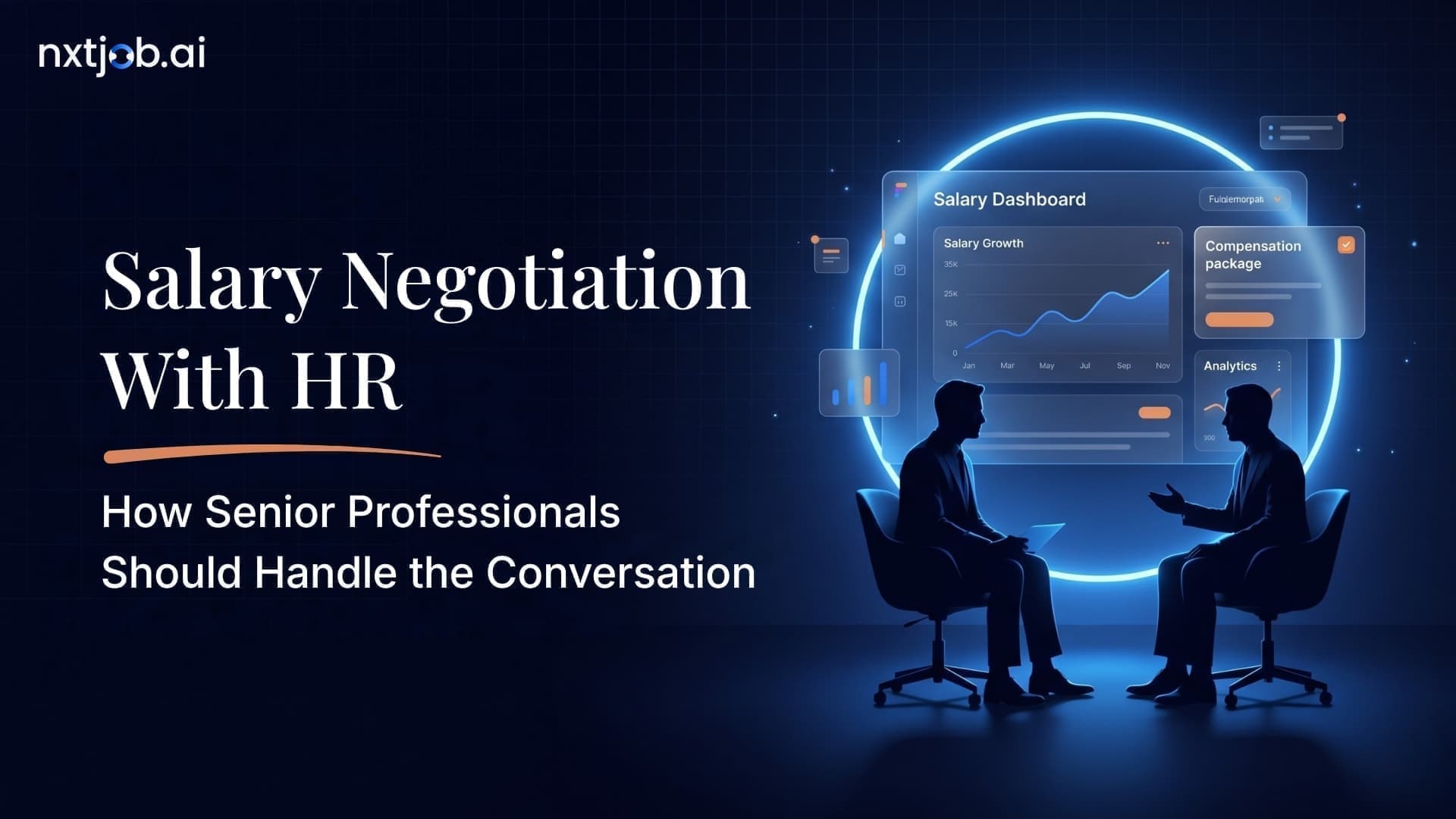
Salary Negotiation With HR: How Senior Professionals Should Handle the Conversation
Learn how senior professionals can handle salary negotiation with HR, respond to pushback, protect their value, and avoid underselling themselves.
Resume
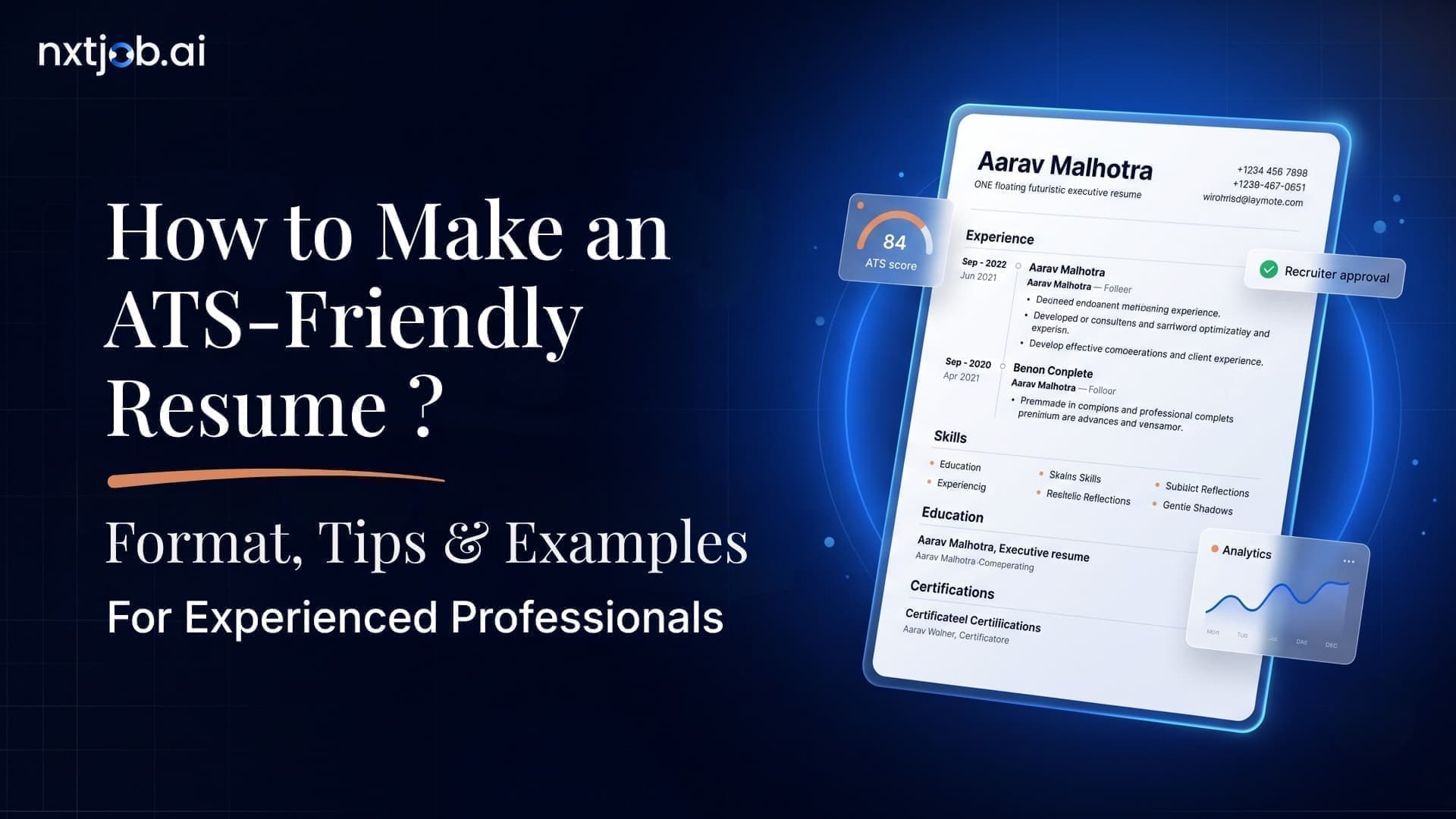
How to Make an ATS-Friendly Resume: Format, Tips, and Examples for Experienced Professionals
Learn how to make an ATS-friendly resume with the right format, keywords, structure, and role-specific details for experienced professionals.
As a co-founder and CEO of NxtJob.ai, I help mid and senior level professionals land 3-5 job offers within 3 months with a substantial salary hike. I am an Internationally Certified Career Coach, Resume Writing Expert, Job Interview and LinkedIn Strategist, and a Motivational Speaker.
Richik Sinha Roy
CEO, NxtJob
Is it really okay to change jobs frequently in India?
How much of a salary hike can I expect when I switch jobs?
Will frequent job changes hurt my chances of getting hired later?
How do I know when it’s time to leave my current job?
Should I always prioritize salary over other factors when switching jobs?
Everything you need to know
Here you can find solutions to all your queries.
Job search
5 min read
How Often Should You Change Jobs to Maximize Your Salary?
Published Date:
|
Last Modified:
If you’ve been working for about 7–15 years, chances are you’ve already asked yourself whether you should stick around in your current role or jump ship to secure a higher salary. In India’s fast-evolving job market—especially in sectors like IT, consulting, finance, and startups—this is not just a passing thought. It’s a real, strategic decision that could either catapult your income to the next level or leave you with a resume that makes hiring managers nervous.
I’m going to walk you through this as if I’m your older brother, who’s seen a fair share of appraisals, counteroffers, and recruiter calls. This isn’t about theoretical advice you find in textbooks. This is about how you, as an Indian professional in mid-senior management, can time your moves to grow your salary without looking flaky or sabotaging long-term career growth.
Let’s dig in.
Why Job Changes Are Crucial for Salary Growth in India
Before we talk frequency, let’s get one thing clear: In India, annual salary increments tend to be modest, especially if you stay with the same employer for too long. Unless you’re in a high-demand niche or your company is scaling aggressively, typical raises hover between 6%–10%. Occasionally, you might see higher bumps if your company did exceptionally well or if you get promoted.
But here’s the kicker—changing jobs can often net you a 20%–40% hike in a single move. That’s not an exaggeration. In fact, for many professionals I’ve mentored, switching companies was the single biggest lever they had to reach an 8-figure CTC.
Some of the most common reasons Indian mid-senior professionals consider moving:
Their salary has lagged behind market standards due to years of low hikes
The company has a slow promotion cycle or rigid pay bands
They want exposure to different industries, technologies, or roles
They’re looking to break the glass ceiling of mid-management
Understanding this context is vital. Because while loyalty has its place, staying too long in one company often caps your earning potential in India’s competitive market.
So, How Often Should You Change Jobs?
There’s no perfect formula that fits everyone. But generally speaking, most career experts (and experienced professionals) recommend:
Changing jobs every 3–4 years early in your career, and then every 4–6 years in mid-senior roles, IF your compensation is stagnating or your learning curve has plateaued.
Let’s break that down a bit more practically:
Years 0–5: It’s okay to move every 2–3 years as you explore what fits you best and ramp up your base salary. Early-career switches are quite common and less likely to raise eyebrows.
Years 5–10: Here, it helps to stay at least 3–4 years in a role to demonstrate stability and show results. At this stage, frequent moves can make you look restless.
Years 10–15: For mid-senior management, 4–6 years per organization is often the sweet spot. You’ve had time to deliver impact and build credibility, but you’re still agile enough to command substantial hikes when moving.
One thing to remember: The first 2 years in any job are usually about learning and establishing trust. If you leave before that, you might find it harder to get strong recommendations or claim measurable impact.
The Risks of Switching Too Often
Before you start plotting a job change every couple of years, let’s be real about the flip side. In India, recruiters and HR leaders are increasingly cautious about “frequent movers.”
If you hop every 1–2 years repeatedly, it can signal:
Lack of commitment or inability to work through challenges
A “grass is greener” mindset that could continue in the future
Risk for the employer, who will invest in your onboarding and training
So think of it this way: If you’re moving, there should be a compelling story—either you’re stepping up in responsibility, shifting industries, or dramatically improving compensation.
Otherwise, you could find your resume getting passed over despite your experience.
How to Know It’s Time to Change Jobs
If you’re unsure whether it’s the right moment to look for something new, ask yourself these questions:
Is my compensation in line with market benchmarks?
Check salary surveys (like Aon Hewitt, Michael Page, or LinkedIn Salary Insights). If you’re significantly underpaid, it might be time to move.
Am I still learning and growing?
If you’ve been doing the same thing for years with no new challenges, your skills may stagnate, and so will your market value.Have I outgrown my role?
If promotions keep getting delayed or your scope hasn’t expanded, it may be a signal.What is my long-term goal?
Sometimes, a lateral move sets you up for a bigger leap in the next 3–5 years.
Don’t make decisions solely based on frustration after a bad appraisal cycle. Instead, look at the bigger picture—are you still on track to the future you want?
Strategies to Maximize Salary When Switching Jobs
If you do decide to change, make sure you do it strategically:
Leverage your network: Internal referrals are still the most reliable way to get interviews with less friction.
Know your market value: Use Glassdoor, AmbitionBox, or reach out to recruiters to get concrete numbers.
Negotiate confidently: In India, many companies expect negotiation. Don’t undersell yourself—be ready with evidence of your performance.
Target roles with larger scope: A job change is the perfect time to move up the ladder, not just sideways.
Consider ESOPs and benefits: Don’t focus only on fixed salary; equity and long-term incentives can be significant wealth builders.
When Staying Makes Sense
Even though switching can accelerate earnings, staying longer in a high-growth organization sometimes pays off better. For example:
If your company is scaling rapidly or preparing for IPO, stock options can multiply your net worth far beyond salary hikes.
If you’re on a clear promotion track with expanded responsibilities, a big raise could come organically in 12–18 months.
If you have strong mentors and a culture that invests in your development, the long-term payoff might outweigh a short-term salary jump.
So, always weigh the opportunity cost. Sometimes, the smartest move is to stay and build depth in your current organization.
Final Thoughts
At the end of the day, there’s no one-size-fits-all answer to how often you should change jobs. But as your older brother figure here, I’ll leave you with this:
Aim for strategic moves, not reactive ones.
Every 3–6 years, do a deliberate audit of your compensation, learning curve, and career trajectory. If you’re falling behind your peers or your own goals, it’s time to explore new opportunities.
But never jump just because everyone else is. The strongest careers are built on a balance of growth, stability, and intentional decisions.
Keep your skills sharp, stay plugged into the market, and trust yourself to know when you’ve outgrown your current role. When you do decide to move, do it boldly—and make sure the next step is genuinely a step forward.
Table of content
Interview
Salary Negotiation With HR: How Senior Professionals Should Handle the Conversation
Learn how senior professionals can handle salary negotiation with HR, respond to pushback, protect their value, and avoid underselling themselves.
Resume
How to Make an ATS-Friendly Resume: Format, Tips, and Examples for Experienced Professionals
Learn how to make an ATS-friendly resume with the right format, keywords, structure, and role-specific details for experienced professionals.
As a co-founder and CEO of NxtJob.ai, I help mid and senior level professionals land 3-5 job offers within 3 months with a substantial salary hike. I am an Internationally Certified Career Coach, Resume Writing Expert, Job Interview and LinkedIn Strategist, and a Motivational Speaker.
Richik Sinha Roy
CEO, NxtJob
Recent articles
Resume
5 min read
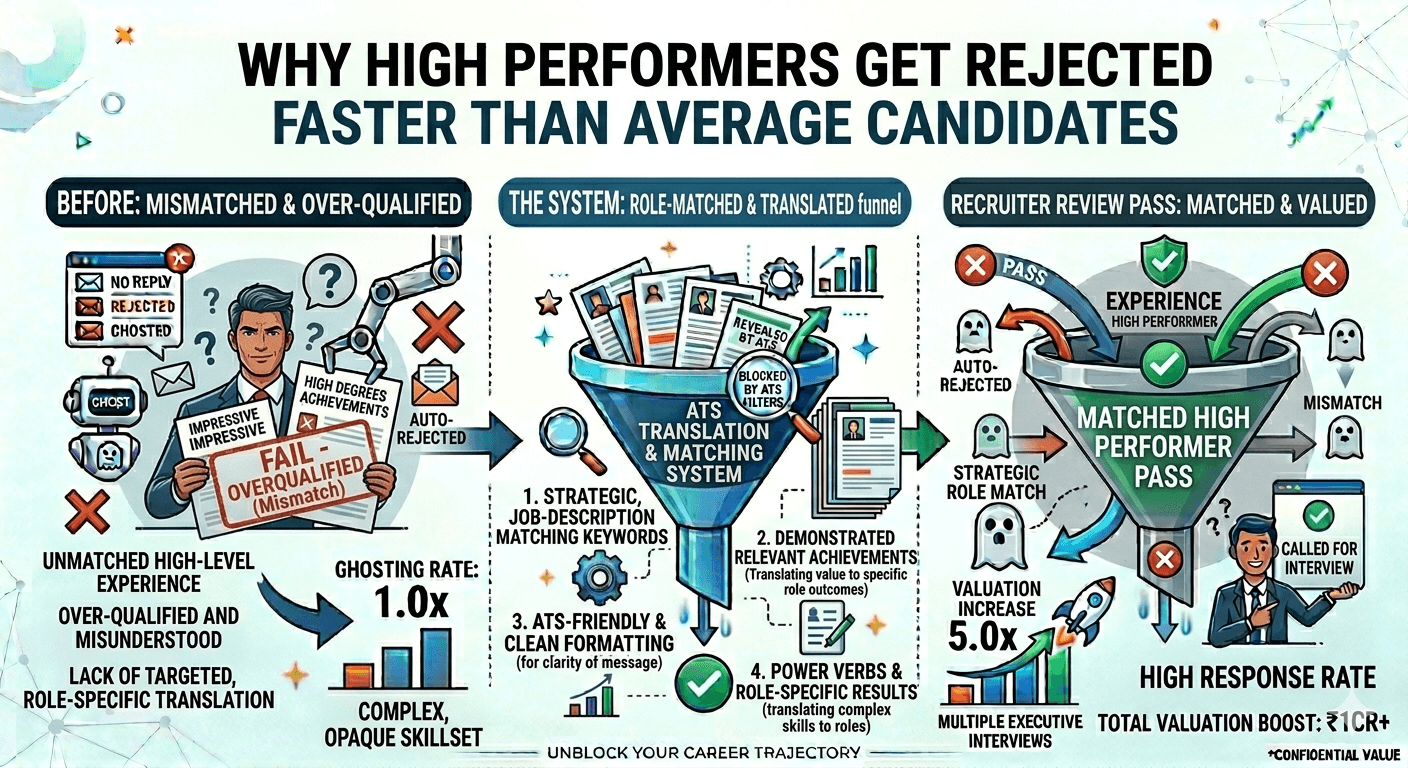
Why High Performers Get Rejected Faster Than Average Candidates
Why High Performers Get Rejected Faster Than Average Candidates
Resume
5 min read
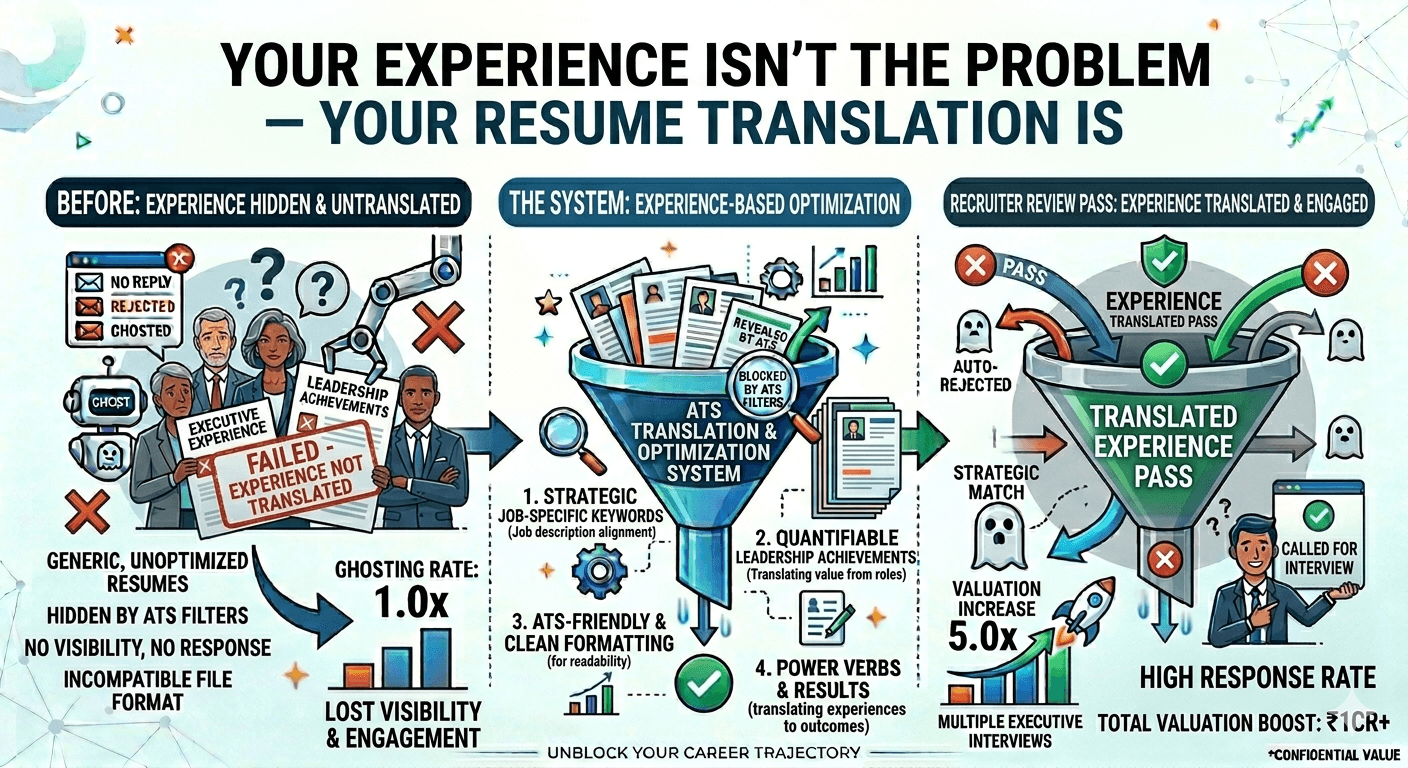
Your Experience Isn’t the Problem, Your Resume Translation Is
Struggling to get interviews despite strong experience? Discover how an ATS Resume Checker reveals hidden resume gaps and helps you translate your experience into results that recruiters actually notice.
Resume
5 min read
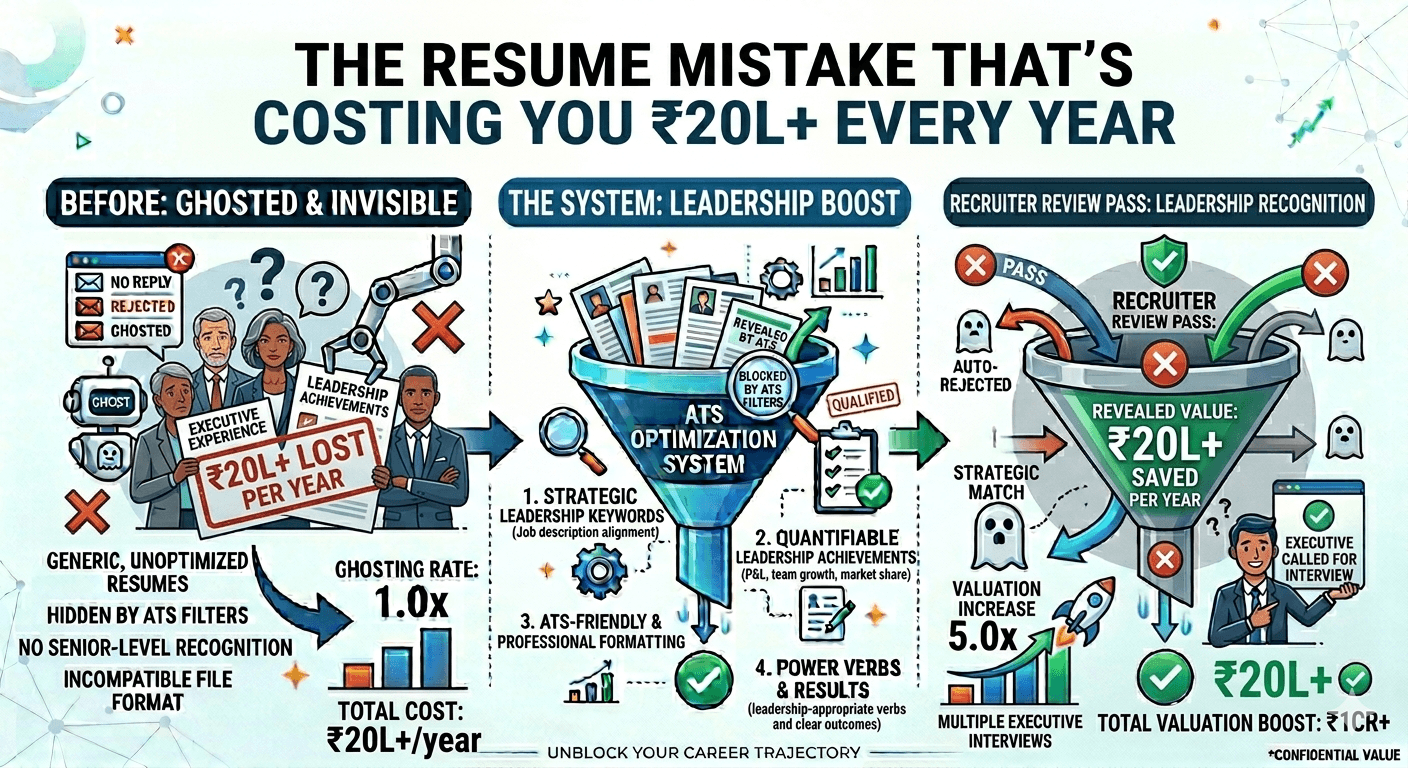
The Resume Mistake That’s Costing You ₹20L+ Every Year
The Resume Mistake That’s Costing You ₹20L+ Every Year
Resume
5 min read
Why High Performers Get Rejected Faster Than Average Candidates
Why High Performers Get Rejected Faster Than Average Candidates
Resume
5 min read
Your Experience Isn’t the Problem, Your Resume Translation Is
Struggling to get interviews despite strong experience? Discover how an ATS Resume Checker reveals hidden resume gaps and helps you translate your experience into results that recruiters actually notice.
Everything you need to know
Here you can find solutions to all your queries.
Is it really okay to change jobs frequently in India?
How much of a salary hike can I expect when I switch jobs?
Will frequent job changes hurt my chances of getting hired later?
How do I know when it’s time to leave my current job?
Should I always prioritize salary over other factors when switching jobs?
Join the Revolution
Your AI career copilot to land you top jobs in under 90 days.
Join the Revolution
Your AI career copilot to land you top jobs in under 90 days.
Join the Revolution
Your AI career copilot to land you top jobs in under 90 days.