
Job search
5 min read
Govt Has the 8th Pay Commission – What’s Holding Back Your ₹20 Lakh Growth?
Published Date:
|
Last Modified:
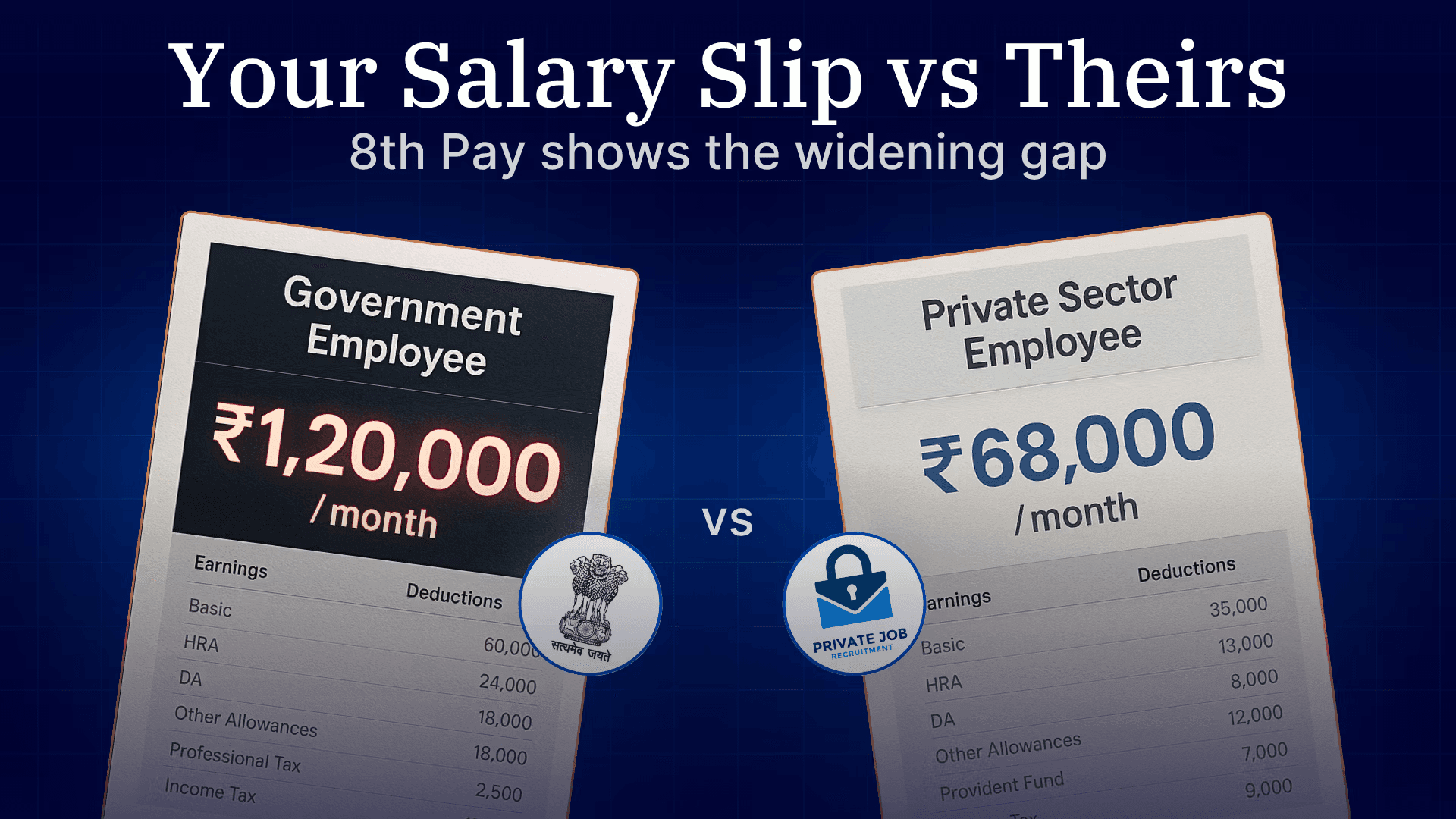
While India gears up for the 8th Pay Commission, expected to be implemented around 2026–27, central government employees are set to receive a significant salary revision. But what does that mean for you—the private-sector professional chasing the ₹20 lakh salary bracket? This article dives deep into how the ripple effect of the Pay Commission can influence your compensation growth, why your hike is delayed, and how to take control of your career trajectory now instead of waiting for the system to catch up.
What Is the 8th Pay Commission and Why Does It Matter?
The Pay Commission is a central government body set up every 10 years to review and recommend salary hikes for government employees and pensioners. The 7th Pay Commission came into effect in January 2016, and while the 8th has not yet been officially constituted, it is expected to be active by 2026–27.
This commission is relevant to you—even if you don’t work in the government—because:
It raises salary benchmarks across industries.
It impacts the hiring market, especially in sectors with crossover talent like IT, finance, healthcare, logistics, and telecom.
It resets expectations for job seekers and recruiters alike, including those in the ₹15–30 lakh salary range.
The ₹20L Salary Barrier: Why It Feels Like a Glass Ceiling
Many high-potential professionals find themselves stuck in the ₹16–18L range for years, despite performance, experience, and leadership contributions. The shift from ₹18L to ₹25L is often slower and harder—not because of your skills, but because of market dynamics.
Here’s what’s holding you back:
1. No Urgency for Recalibration Yet
Companies benchmark salaries based on what competitors are offering. Since the 8th Pay Commission hasn’t yet been implemented, most private companies haven’t felt the need to proactively revise compensation, especially for high-cost roles.
2. Delayed Government Action
The commission hasn’t been officially formed, and implementation could take years. Without finalized data—like fitment factor, hike percentage, or allowance changes—private players are sitting on the fence.
3. High CTC, Low Clarity
When you're already near ₹20L, your growth relies more on promotions, business impact, and negotiations. Annual increments of 7–10% won't move the needle quickly, and without industry-wide salary pressure, hikes remain conservative.
4. Flat Corporate Structures
Most mid-sized firms and startups don’t have enough hierarchy layers beyond ₹20L roles. They often combine multiple responsibilities under a single title (e.g., Growth Lead, Marketing Manager), limiting upward movement unless business revenue scales dramatically.
What Happens When the 8th Pay Commission Hits?
Once the commission is rolled out, here’s how the private sector is likely to react:
Companies will re-benchmark salaries across critical and overlapping roles, especially where they compete with PSU or government talent.
Freshers and mid-level professionals will expect better starting packages, creating pressure for salary hikes up the chain.
Top performers in ₹15L+ bands will use the Commission as negotiation leverage, forcing HR to revisit salary norms.
High-growth companies will raise salary bands preemptively to attract and retain top-tier talent who might otherwise consider safer government roles.
What You Can Do Right Now
Waiting for external salary hikes means giving up control over your career pace. Here’s what to focus on instead:
1. Audit Your Compensation vs Market Trends
Use platforms like AmbitionBox, Levels.fyi, and Glassdoor to compare your role and salary with peers across companies. Be realistic about experience, team size, and outcomes you've driven.
2. Upskill in Strategic High-ROI Areas
If you’re in marketing, learn performance tracking. If you’re in product, learn user acquisition and retention metrics. If you're in finance, dive into automation and analytics. These skill additions justify double-digit hikes.
3. Build Influence, Not Just Execution
Managers making ₹20–25L don't just execute—they influence business strategy. Start taking ownership of metrics that link directly to revenue, profitability, or retention.
4. Create Leverage Before Negotiating
Plan job switches or internal negotiations around annual business cycles, revenue closures, or post-funding moments. Use upcoming macro events like the Pay Commission as a backdrop for well-timed salary discussions.
5. Consult, Freelance, or Mentor
Many mid-career professionals boost income beyond ₹20L by consulting or mentoring junior teams part-time. This also builds personal brand and negotiation confidence.
Future Outlook: Will ₹20L Become the New Norm?
It very well could. If the 8th Pay Commission pushes up government salaries by 25–30%, private-sector firms in metros will be forced to adjust. This won't be immediate—it’ll unfold over 12–18 months post-implementation.
But those who prepare early will benefit first.
The ₹20L ceiling will become a milestone many hit sooner—not by waiting for the economy to shift, but by preparing before the shift. Whether you're in sales, tech, marketing, or operations, the goal is to build visibility, value, and negotiation skills right now.

As a co-founder and CEO of NxtJob.ai, I help mid and senior level professionals land 3-5 job offers within 3 months with a substantial salary hike. I am an Internationally Certified Career Coach, Resume Writing Expert, Job Interview and LinkedIn Strategist, and a Motivational Speaker.
Richik Sinha Roy
CEO, NxtJob
Recent articles

Resume
5 min read
ATS Resume Format: How to Create a Resume That Gets Past Applicant Tracking Systems
Learn how to create an ATS-friendly resume that passes through applicant tracking systems and increases your chances of landing an interview.
Resume
5 min read
ATS Resume Format: How to Create a Resume That Gets Past Applicant Tracking Systems
Learn how to create an ATS-friendly resume that passes through applicant tracking systems and increases your chances of landing an interview.
Resume
5 min read
ATS Resume Format: How to Create a Resume That Gets Past Applicant Tracking Systems
Learn how to create an ATS-friendly resume that passes through applicant tracking systems and increases your chances of landing an interview.
Resume
5 min read
ATS Resume Format: How to Create a Resume That Gets Past Applicant Tracking Systems
Learn how to create an ATS-friendly resume that passes through applicant tracking systems and increases your chances of landing an interview.
Resume
5 min read
ATS Resume Format: How to Create a Resume That Gets Past Applicant Tracking Systems
Learn how to create an ATS-friendly resume that passes through applicant tracking systems and increases your chances of landing an interview.
Resume
5 min read
ATS Resume Format: How to Create a Resume That Gets Past Applicant Tracking Systems
Learn how to create an ATS-friendly resume that passes through applicant tracking systems and increases your chances of landing an interview.
Everything you need to know
Here you can find solutions to all your queries.
Is the 8th Pay Commission only for government employees?
How can the 8th Pay Commission impact private sector salaries?
Will salaries in the private sector go up after the Pay Commission is implemented?
I’m earning ₹18L annually. What can I do to reach ₹25L?
Job search
5 min read
Govt Has the 8th Pay Commission – What’s Holding Back Your ₹20 Lakh Growth?
Published Date:
|
Last Modified:
While India gears up for the 8th Pay Commission, expected to be implemented around 2026–27, central government employees are set to receive a significant salary revision. But what does that mean for you—the private-sector professional chasing the ₹20 lakh salary bracket? This article dives deep into how the ripple effect of the Pay Commission can influence your compensation growth, why your hike is delayed, and how to take control of your career trajectory now instead of waiting for the system to catch up.
What Is the 8th Pay Commission and Why Does It Matter?
The Pay Commission is a central government body set up every 10 years to review and recommend salary hikes for government employees and pensioners. The 7th Pay Commission came into effect in January 2016, and while the 8th has not yet been officially constituted, it is expected to be active by 2026–27.
This commission is relevant to you—even if you don’t work in the government—because:
It raises salary benchmarks across industries.
It impacts the hiring market, especially in sectors with crossover talent like IT, finance, healthcare, logistics, and telecom.
It resets expectations for job seekers and recruiters alike, including those in the ₹15–30 lakh salary range.
The ₹20L Salary Barrier: Why It Feels Like a Glass Ceiling
Many high-potential professionals find themselves stuck in the ₹16–18L range for years, despite performance, experience, and leadership contributions. The shift from ₹18L to ₹25L is often slower and harder—not because of your skills, but because of market dynamics.
Here’s what’s holding you back:
1. No Urgency for Recalibration Yet
Companies benchmark salaries based on what competitors are offering. Since the 8th Pay Commission hasn’t yet been implemented, most private companies haven’t felt the need to proactively revise compensation, especially for high-cost roles.
2. Delayed Government Action
The commission hasn’t been officially formed, and implementation could take years. Without finalized data—like fitment factor, hike percentage, or allowance changes—private players are sitting on the fence.
3. High CTC, Low Clarity
When you're already near ₹20L, your growth relies more on promotions, business impact, and negotiations. Annual increments of 7–10% won't move the needle quickly, and without industry-wide salary pressure, hikes remain conservative.
4. Flat Corporate Structures
Most mid-sized firms and startups don’t have enough hierarchy layers beyond ₹20L roles. They often combine multiple responsibilities under a single title (e.g., Growth Lead, Marketing Manager), limiting upward movement unless business revenue scales dramatically.
What Happens When the 8th Pay Commission Hits?
Once the commission is rolled out, here’s how the private sector is likely to react:
Companies will re-benchmark salaries across critical and overlapping roles, especially where they compete with PSU or government talent.
Freshers and mid-level professionals will expect better starting packages, creating pressure for salary hikes up the chain.
Top performers in ₹15L+ bands will use the Commission as negotiation leverage, forcing HR to revisit salary norms.
High-growth companies will raise salary bands preemptively to attract and retain top-tier talent who might otherwise consider safer government roles.
What You Can Do Right Now
Waiting for external salary hikes means giving up control over your career pace. Here’s what to focus on instead:
1. Audit Your Compensation vs Market Trends
Use platforms like AmbitionBox, Levels.fyi, and Glassdoor to compare your role and salary with peers across companies. Be realistic about experience, team size, and outcomes you've driven.
2. Upskill in Strategic High-ROI Areas
If you’re in marketing, learn performance tracking. If you’re in product, learn user acquisition and retention metrics. If you're in finance, dive into automation and analytics. These skill additions justify double-digit hikes.
3. Build Influence, Not Just Execution
Managers making ₹20–25L don't just execute—they influence business strategy. Start taking ownership of metrics that link directly to revenue, profitability, or retention.
4. Create Leverage Before Negotiating
Plan job switches or internal negotiations around annual business cycles, revenue closures, or post-funding moments. Use upcoming macro events like the Pay Commission as a backdrop for well-timed salary discussions.
5. Consult, Freelance, or Mentor
Many mid-career professionals boost income beyond ₹20L by consulting or mentoring junior teams part-time. This also builds personal brand and negotiation confidence.
Future Outlook: Will ₹20L Become the New Norm?
It very well could. If the 8th Pay Commission pushes up government salaries by 25–30%, private-sector firms in metros will be forced to adjust. This won't be immediate—it’ll unfold over 12–18 months post-implementation.
But those who prepare early will benefit first.
The ₹20L ceiling will become a milestone many hit sooner—not by waiting for the economy to shift, but by preparing before the shift. Whether you're in sales, tech, marketing, or operations, the goal is to build visibility, value, and negotiation skills right now.
Interview
Salary Negotiation With HR: How Senior Professionals Should Handle the Conversation
Learn how senior professionals can handle salary negotiation with HR, respond to pushback, protect their value, and avoid underselling themselves.
Resume
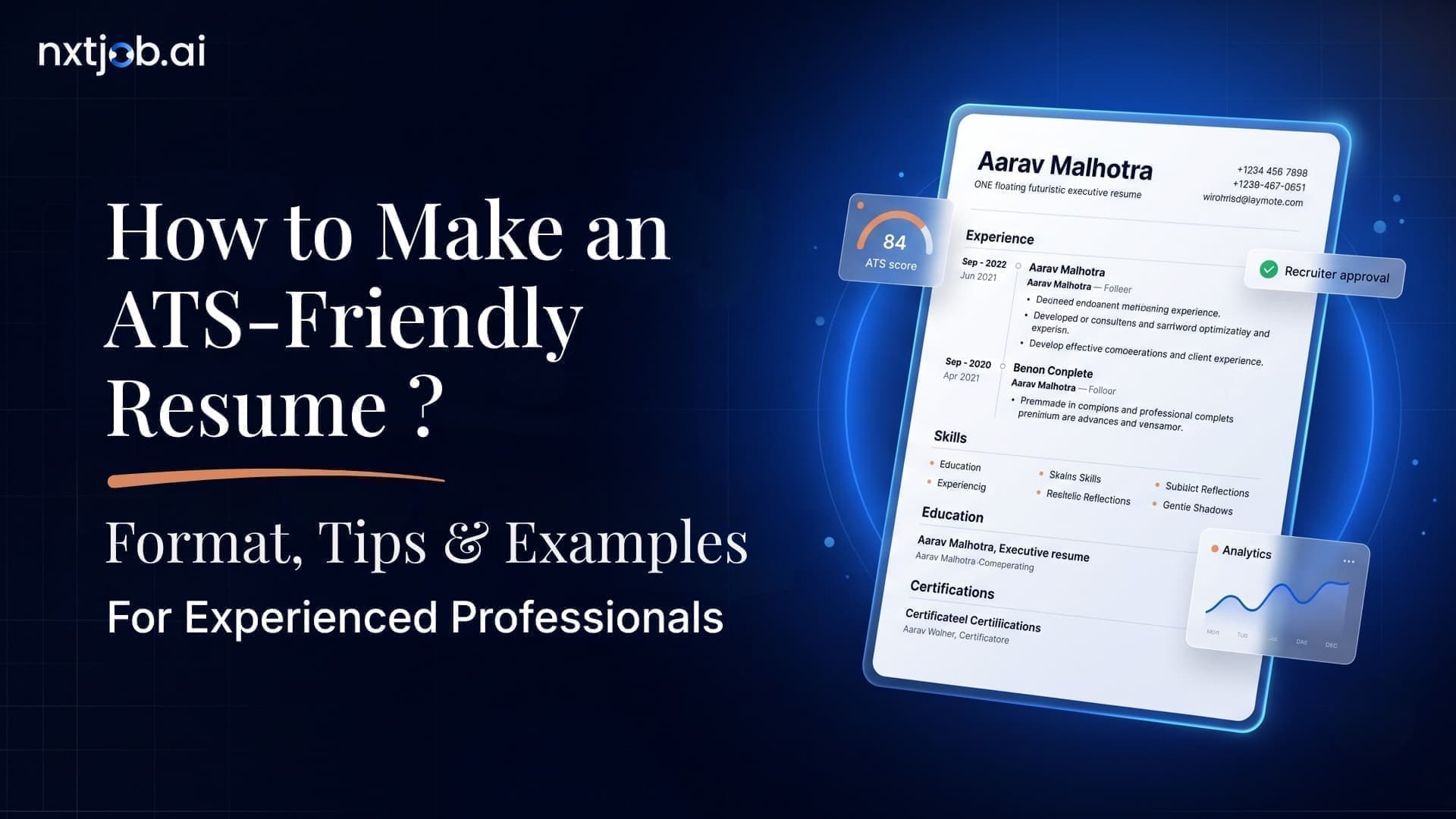
How to Make an ATS-Friendly Resume: Format, Tips, and Examples for Experienced Professionals
Learn how to make an ATS-friendly resume with the right format, keywords, structure, and role-specific details for experienced professionals.
As a co-founder and CEO of NxtJob.ai, I help mid and senior level professionals land 3-5 job offers within 3 months with a substantial salary hike. I am an Internationally Certified Career Coach, Resume Writing Expert, Job Interview and LinkedIn Strategist, and a Motivational Speaker.
Richik Sinha Roy
CEO, NxtJob
Is the 8th Pay Commission only for government employees?
How can the 8th Pay Commission impact private sector salaries?
Will salaries in the private sector go up after the Pay Commission is implemented?
I’m earning ₹18L annually. What can I do to reach ₹25L?
Everything you need to know
Here you can find solutions to all your queries.
Job search
5 min read
Govt Has the 8th Pay Commission – What’s Holding Back Your ₹20 Lakh Growth?
Published Date:
|
Last Modified:
While India gears up for the 8th Pay Commission, expected to be implemented around 2026–27, central government employees are set to receive a significant salary revision. But what does that mean for you—the private-sector professional chasing the ₹20 lakh salary bracket? This article dives deep into how the ripple effect of the Pay Commission can influence your compensation growth, why your hike is delayed, and how to take control of your career trajectory now instead of waiting for the system to catch up.
What Is the 8th Pay Commission and Why Does It Matter?
The Pay Commission is a central government body set up every 10 years to review and recommend salary hikes for government employees and pensioners. The 7th Pay Commission came into effect in January 2016, and while the 8th has not yet been officially constituted, it is expected to be active by 2026–27.
This commission is relevant to you—even if you don’t work in the government—because:
It raises salary benchmarks across industries.
It impacts the hiring market, especially in sectors with crossover talent like IT, finance, healthcare, logistics, and telecom.
It resets expectations for job seekers and recruiters alike, including those in the ₹15–30 lakh salary range.
The ₹20L Salary Barrier: Why It Feels Like a Glass Ceiling
Many high-potential professionals find themselves stuck in the ₹16–18L range for years, despite performance, experience, and leadership contributions. The shift from ₹18L to ₹25L is often slower and harder—not because of your skills, but because of market dynamics.
Here’s what’s holding you back:
1. No Urgency for Recalibration Yet
Companies benchmark salaries based on what competitors are offering. Since the 8th Pay Commission hasn’t yet been implemented, most private companies haven’t felt the need to proactively revise compensation, especially for high-cost roles.
2. Delayed Government Action
The commission hasn’t been officially formed, and implementation could take years. Without finalized data—like fitment factor, hike percentage, or allowance changes—private players are sitting on the fence.
3. High CTC, Low Clarity
When you're already near ₹20L, your growth relies more on promotions, business impact, and negotiations. Annual increments of 7–10% won't move the needle quickly, and without industry-wide salary pressure, hikes remain conservative.
4. Flat Corporate Structures
Most mid-sized firms and startups don’t have enough hierarchy layers beyond ₹20L roles. They often combine multiple responsibilities under a single title (e.g., Growth Lead, Marketing Manager), limiting upward movement unless business revenue scales dramatically.
What Happens When the 8th Pay Commission Hits?
Once the commission is rolled out, here’s how the private sector is likely to react:
Companies will re-benchmark salaries across critical and overlapping roles, especially where they compete with PSU or government talent.
Freshers and mid-level professionals will expect better starting packages, creating pressure for salary hikes up the chain.
Top performers in ₹15L+ bands will use the Commission as negotiation leverage, forcing HR to revisit salary norms.
High-growth companies will raise salary bands preemptively to attract and retain top-tier talent who might otherwise consider safer government roles.
What You Can Do Right Now
Waiting for external salary hikes means giving up control over your career pace. Here’s what to focus on instead:
1. Audit Your Compensation vs Market Trends
Use platforms like AmbitionBox, Levels.fyi, and Glassdoor to compare your role and salary with peers across companies. Be realistic about experience, team size, and outcomes you've driven.
2. Upskill in Strategic High-ROI Areas
If you’re in marketing, learn performance tracking. If you’re in product, learn user acquisition and retention metrics. If you're in finance, dive into automation and analytics. These skill additions justify double-digit hikes.
3. Build Influence, Not Just Execution
Managers making ₹20–25L don't just execute—they influence business strategy. Start taking ownership of metrics that link directly to revenue, profitability, or retention.
4. Create Leverage Before Negotiating
Plan job switches or internal negotiations around annual business cycles, revenue closures, or post-funding moments. Use upcoming macro events like the Pay Commission as a backdrop for well-timed salary discussions.
5. Consult, Freelance, or Mentor
Many mid-career professionals boost income beyond ₹20L by consulting or mentoring junior teams part-time. This also builds personal brand and negotiation confidence.
Future Outlook: Will ₹20L Become the New Norm?
It very well could. If the 8th Pay Commission pushes up government salaries by 25–30%, private-sector firms in metros will be forced to adjust. This won't be immediate—it’ll unfold over 12–18 months post-implementation.
But those who prepare early will benefit first.
The ₹20L ceiling will become a milestone many hit sooner—not by waiting for the economy to shift, but by preparing before the shift. Whether you're in sales, tech, marketing, or operations, the goal is to build visibility, value, and negotiation skills right now.
Interview
Salary Negotiation With HR: How Senior Professionals Should Handle the Conversation
Learn how senior professionals can handle salary negotiation with HR, respond to pushback, protect their value, and avoid underselling themselves.
Resume
How to Make an ATS-Friendly Resume: Format, Tips, and Examples for Experienced Professionals
Learn how to make an ATS-friendly resume with the right format, keywords, structure, and role-specific details for experienced professionals.
As a co-founder and CEO of NxtJob.ai, I help mid and senior level professionals land 3-5 job offers within 3 months with a substantial salary hike. I am an Internationally Certified Career Coach, Resume Writing Expert, Job Interview and LinkedIn Strategist, and a Motivational Speaker.
Richik Sinha Roy
CEO, NxtJob
Recent articles
Resume
5 min read
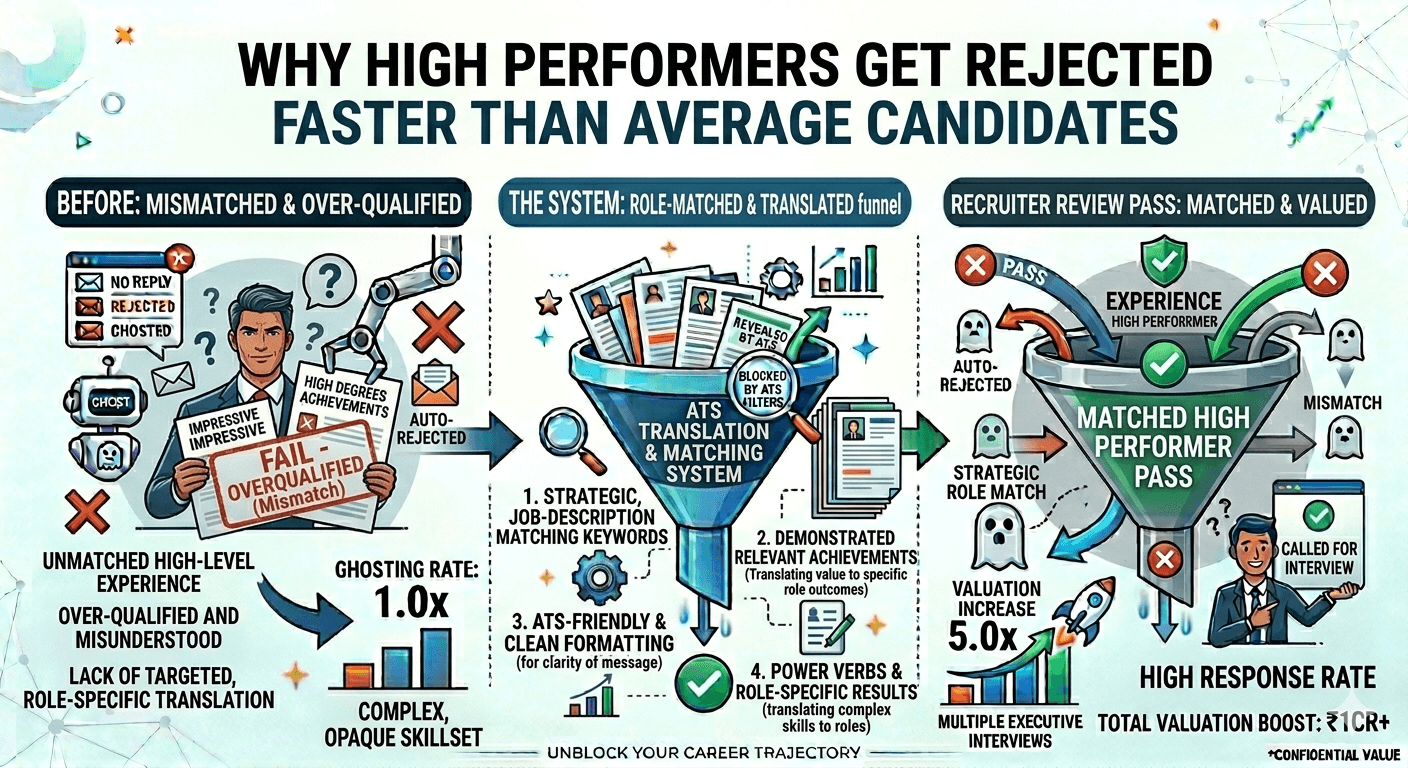
Why High Performers Get Rejected Faster Than Average Candidates
Why High Performers Get Rejected Faster Than Average Candidates
Resume
5 min read
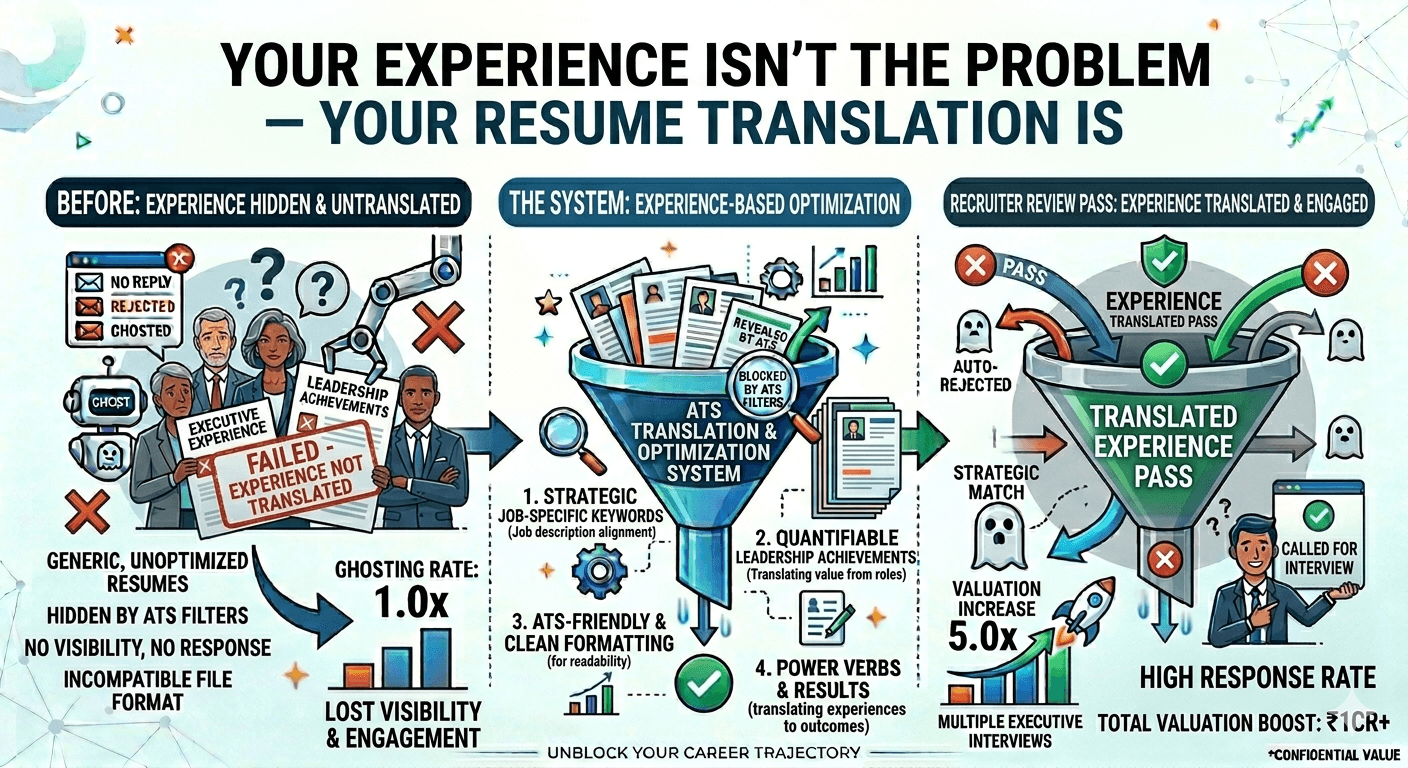
Your Experience Isn’t the Problem, Your Resume Translation Is
Struggling to get interviews despite strong experience? Discover how an ATS Resume Checker reveals hidden resume gaps and helps you translate your experience into results that recruiters actually notice.
Resume
5 min read
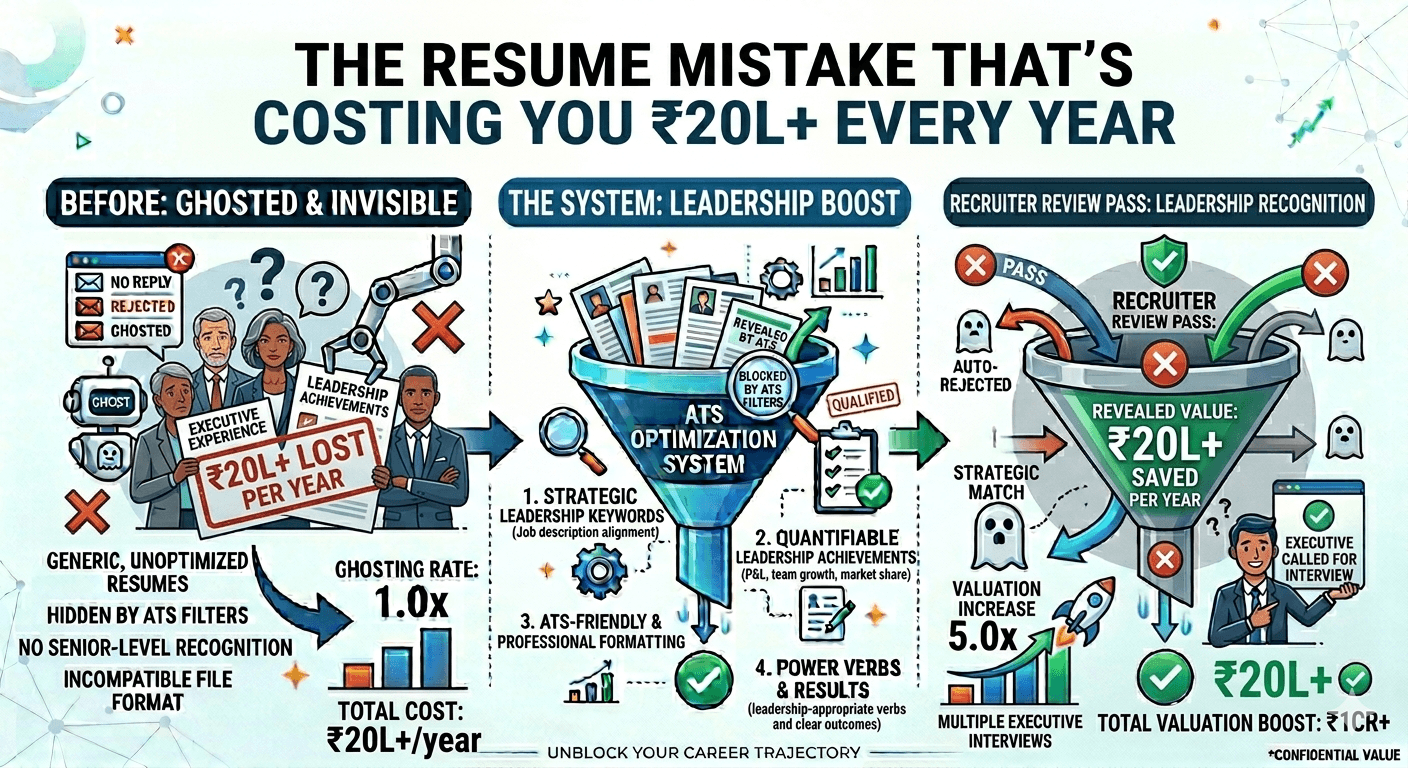
The Resume Mistake That’s Costing You ₹20L+ Every Year
The Resume Mistake That’s Costing You ₹20L+ Every Year
Resume
5 min read
Why High Performers Get Rejected Faster Than Average Candidates
Why High Performers Get Rejected Faster Than Average Candidates
Resume
5 min read
Your Experience Isn’t the Problem, Your Resume Translation Is
Struggling to get interviews despite strong experience? Discover how an ATS Resume Checker reveals hidden resume gaps and helps you translate your experience into results that recruiters actually notice.
Everything you need to know
Here you can find solutions to all your queries.
Is the 8th Pay Commission only for government employees?
How can the 8th Pay Commission impact private sector salaries?
Will salaries in the private sector go up after the Pay Commission is implemented?
I’m earning ₹18L annually. What can I do to reach ₹25L?
Join the Revolution
Your AI career copilot to land you top jobs in under 90 days.
Join the Revolution
Your AI career copilot to land you top jobs in under 90 days.
Join the Revolution
Your AI career copilot to land you top jobs in under 90 days.