
Job search
5 min read
7 Career Bottlenecks That Stop Even Experienced Professionals
Published Date:
|
Last Modified:
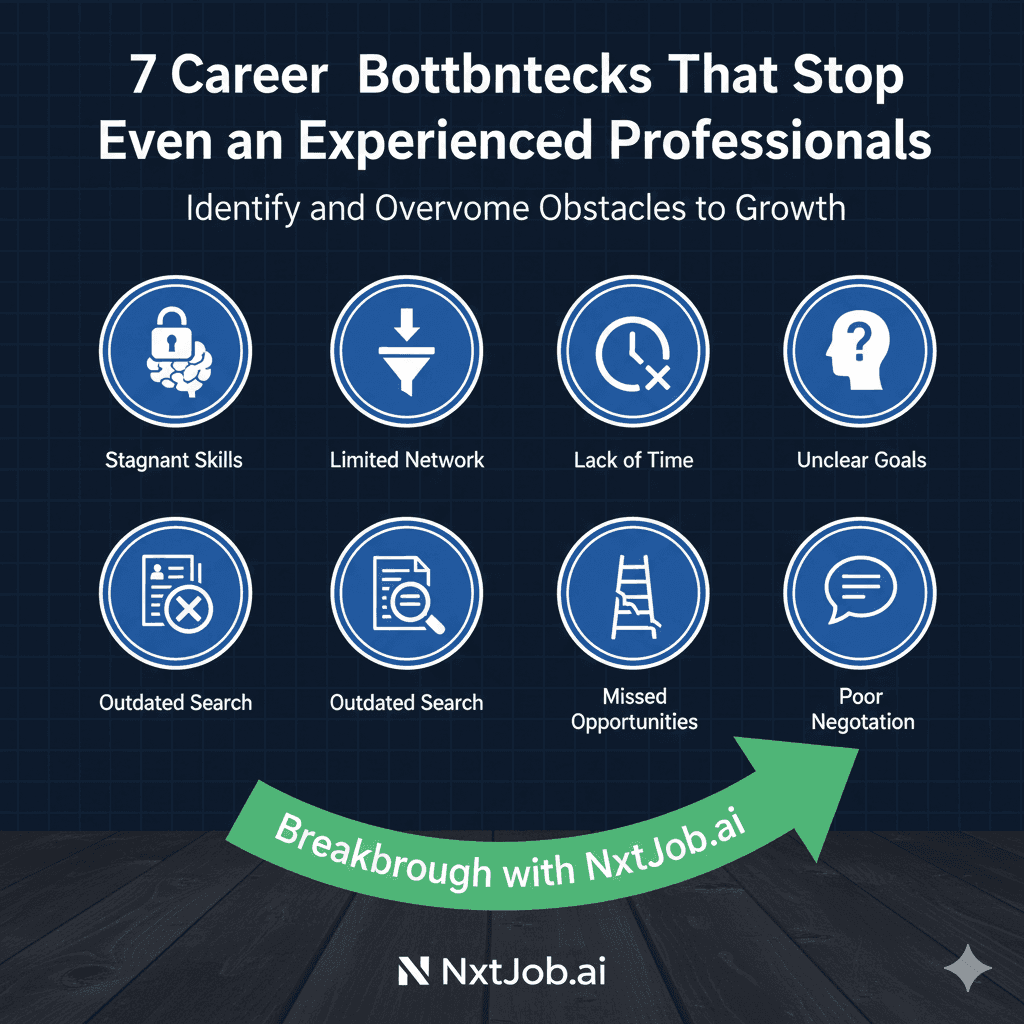
After working with thousands of mid-senior professionals at NxtJob.ai, I’ve noticed something that still surprises people when I say it out loud. Career stagnation almost never comes from a lack of talent. In fact, it’s often the opposite. The people who feel most stuck are usually very good at what they do.
What holds them back tends to be less visible. Quiet constraints. Things no one explicitly teaches you, especially once you’re past the early stages of your career.
Over time, a few patterns kept repeating. Not always in clean ways, and not always just one at a time. But there are seven bottlenecks I’ve seen slow down even strong, experienced professionals. I’ll walk through them, along with what I’ve seen actually help.
1. Weak positioning in the job market
Most professionals believe their experience should speak for itself. I used to think that too. It doesn’t.
Recruiters and hiring managers skim, not study. They decide quickly, often in seconds, based on how clearly someone is positioned. Not their potential. Not their effort. Just clarity.
Your resume, LinkedIn profile, job titles, and achievements all need to answer a few questions immediately: what you do, who you do it for, and what changes because of your work.
One thing that shows up again and again is missing quantification. People describe responsibilities but skip outcomes. And without numbers or concrete results, impact stays vague. When positioning is unclear, strong candidates get filtered out long before anyone sees what they’re actually capable of.
2. Staying too long in the wrong roles
This one is tricky, because it doesn’t feel like a problem while it’s happening.
You get good at your role. Then very good. Then comfortable. And comfort slowly turns into inertia. Not because you’ve stopped caring, but because the job stopped stretching you.
The market doesn’t really reward tenure the way it used to. It rewards learning speed. Movement. The ability to grow into the next bracket before you’re pushed into it.
I’ve seen many people operate at a higher level than their title for years, without realizing that the role itself had become the bottleneck. Growth often requires leaving a role that still feels safe, even enjoyable. That’s not an easy call to make.
3. No personal brand or public proof of skill
There’s an uncomfortable rule in today’s professional world: if the market doesn’t know you’re good, it treats you as if you’re not.
That doesn’t mean everyone needs to be loud or self-promotional. But some form of visible proof matters now. Especially at mid to senior levels.
The professionals who seem to attract opportunities faster tend to do a few simple things consistently. They share how they think, not just what they do. They talk through problems they’ve solved. They engage with conversations already happening in their industry.
Visibility compounds. Quietly at first. Then suddenly. Avoiding it altogether has become its own bottleneck, even for people with strong track records.
4. A resume that undersells real value
A resume isn’t a life history. It’s closer to a sales asset. And most people don’t write it that way.
Common patterns show up here: long lists of responsibilities, generic language, buzzwords without evidence, or structure that makes it hard to scan quickly. Sometimes key sections are missing altogether.
The result is subtle but costly. If the resume doesn’t clearly communicate value at the screening stage, the process stops there. Not because the person isn’t qualified, but because the signal never landed.
This is one of those bottlenecks that feels administrative, yet has outsized impact.
5. Not upgrading skills fast enough
The market has a short memory. It doesn’t care much about what you learned years ago. It cares about what you can apply now.
This shows up clearly in fast-moving functions like product, data, operations, and leadership roles. People who progress steadily tend to focus less on collecting skills and more on keeping their skills relevant.
Short learning cycles. Immediate application. Feedback loops. Those matter more than long, unfocused upskilling phases. When adaptation slows down, someone else usually fills the gap.
6. No clear career metrics or progress system
A lot of professionals operate with goals that sound reasonable but aren’t measurable.
“I want a better role.”
“I want to grow faster.”
“I want to earn more.”
They’re understandable goals. They’re also hard to act on.
Without clear metrics, it’s difficult to know if you’re making progress or just staying busy. Structure brings clarity here. Defining objectives and breaking them into concrete outcomes removes a surprising amount of mental noise.
Once progress is visible, momentum becomes easier to sustain. Without it, even motivated people drift.
7. Trying to solve everything alone
This might be the most overlooked bottleneck.
At certain stages, career growth requires skills outside your core expertise. Understanding hiring psychology. Positioning yourself in the market. Negotiating offers. Designing resumes that actually convert. Navigating hidden hiring pipelines.
Doing all of that alone is possible, but slow. The professionals who move faster usually aren’t more talented. They have support. Coaches. Systems. Feedback. Someone who can see blind spots they can’t.
Guidance doesn’t replace effort. It multiplies it.
Final thoughts
Career bottlenecks don’t get solved by working harder. They get solved by removing constraints.
The fastest-growing professionals aren’t always the busiest ones. They’re the ones who identify what’s holding them back and deal with it directly.
If you’re feeling stuck despite being capable, it’s rarely a question of ability. More often, it’s one or two invisible bottlenecks quietly doing their job.
Remove those, and things tend to move. Sometimes faster than expected.

As a co-founder and CEO of NxtJob.ai, I help mid and senior level professionals land 3-5 job offers within 3 months with a substantial salary hike. I am an Internationally Certified Career Coach, Resume Writing Expert, Job Interview and LinkedIn Strategist, and a Motivational Speaker.
Richik Sinha Roy
CEO, NxtJob
Recent articles

Resume
5 min read
ATS Resume Format: How to Create a Resume That Gets Past Applicant Tracking Systems
Learn how to create an ATS-friendly resume that passes through applicant tracking systems and increases your chances of landing an interview.
Resume
5 min read
ATS Resume Format: How to Create a Resume That Gets Past Applicant Tracking Systems
Learn how to create an ATS-friendly resume that passes through applicant tracking systems and increases your chances of landing an interview.
Resume
5 min read
ATS Resume Format: How to Create a Resume That Gets Past Applicant Tracking Systems
Learn how to create an ATS-friendly resume that passes through applicant tracking systems and increases your chances of landing an interview.
Resume
5 min read
ATS Resume Format: How to Create a Resume That Gets Past Applicant Tracking Systems
Learn how to create an ATS-friendly resume that passes through applicant tracking systems and increases your chances of landing an interview.
Resume
5 min read
ATS Resume Format: How to Create a Resume That Gets Past Applicant Tracking Systems
Learn how to create an ATS-friendly resume that passes through applicant tracking systems and increases your chances of landing an interview.
Resume
5 min read
ATS Resume Format: How to Create a Resume That Gets Past Applicant Tracking Systems
Learn how to create an ATS-friendly resume that passes through applicant tracking systems and increases your chances of landing an interview.
Everything you need to know
Here you can find solutions to all your queries.
Job search
5 min read
7 Career Bottlenecks That Stop Even Experienced Professionals
Published Date:
|
Last Modified:
After working with thousands of mid-senior professionals at NxtJob.ai, I’ve noticed something that still surprises people when I say it out loud. Career stagnation almost never comes from a lack of talent. In fact, it’s often the opposite. The people who feel most stuck are usually very good at what they do.
What holds them back tends to be less visible. Quiet constraints. Things no one explicitly teaches you, especially once you’re past the early stages of your career.
Over time, a few patterns kept repeating. Not always in clean ways, and not always just one at a time. But there are seven bottlenecks I’ve seen slow down even strong, experienced professionals. I’ll walk through them, along with what I’ve seen actually help.
1. Weak positioning in the job market
Most professionals believe their experience should speak for itself. I used to think that too. It doesn’t.
Recruiters and hiring managers skim, not study. They decide quickly, often in seconds, based on how clearly someone is positioned. Not their potential. Not their effort. Just clarity.
Your resume, LinkedIn profile, job titles, and achievements all need to answer a few questions immediately: what you do, who you do it for, and what changes because of your work.
One thing that shows up again and again is missing quantification. People describe responsibilities but skip outcomes. And without numbers or concrete results, impact stays vague. When positioning is unclear, strong candidates get filtered out long before anyone sees what they’re actually capable of.
2. Staying too long in the wrong roles
This one is tricky, because it doesn’t feel like a problem while it’s happening.
You get good at your role. Then very good. Then comfortable. And comfort slowly turns into inertia. Not because you’ve stopped caring, but because the job stopped stretching you.
The market doesn’t really reward tenure the way it used to. It rewards learning speed. Movement. The ability to grow into the next bracket before you’re pushed into it.
I’ve seen many people operate at a higher level than their title for years, without realizing that the role itself had become the bottleneck. Growth often requires leaving a role that still feels safe, even enjoyable. That’s not an easy call to make.
3. No personal brand or public proof of skill
There’s an uncomfortable rule in today’s professional world: if the market doesn’t know you’re good, it treats you as if you’re not.
That doesn’t mean everyone needs to be loud or self-promotional. But some form of visible proof matters now. Especially at mid to senior levels.
The professionals who seem to attract opportunities faster tend to do a few simple things consistently. They share how they think, not just what they do. They talk through problems they’ve solved. They engage with conversations already happening in their industry.
Visibility compounds. Quietly at first. Then suddenly. Avoiding it altogether has become its own bottleneck, even for people with strong track records.
4. A resume that undersells real value
A resume isn’t a life history. It’s closer to a sales asset. And most people don’t write it that way.
Common patterns show up here: long lists of responsibilities, generic language, buzzwords without evidence, or structure that makes it hard to scan quickly. Sometimes key sections are missing altogether.
The result is subtle but costly. If the resume doesn’t clearly communicate value at the screening stage, the process stops there. Not because the person isn’t qualified, but because the signal never landed.
This is one of those bottlenecks that feels administrative, yet has outsized impact.
5. Not upgrading skills fast enough
The market has a short memory. It doesn’t care much about what you learned years ago. It cares about what you can apply now.
This shows up clearly in fast-moving functions like product, data, operations, and leadership roles. People who progress steadily tend to focus less on collecting skills and more on keeping their skills relevant.
Short learning cycles. Immediate application. Feedback loops. Those matter more than long, unfocused upskilling phases. When adaptation slows down, someone else usually fills the gap.
6. No clear career metrics or progress system
A lot of professionals operate with goals that sound reasonable but aren’t measurable.
“I want a better role.”
“I want to grow faster.”
“I want to earn more.”
They’re understandable goals. They’re also hard to act on.
Without clear metrics, it’s difficult to know if you’re making progress or just staying busy. Structure brings clarity here. Defining objectives and breaking them into concrete outcomes removes a surprising amount of mental noise.
Once progress is visible, momentum becomes easier to sustain. Without it, even motivated people drift.
7. Trying to solve everything alone
This might be the most overlooked bottleneck.
At certain stages, career growth requires skills outside your core expertise. Understanding hiring psychology. Positioning yourself in the market. Negotiating offers. Designing resumes that actually convert. Navigating hidden hiring pipelines.
Doing all of that alone is possible, but slow. The professionals who move faster usually aren’t more talented. They have support. Coaches. Systems. Feedback. Someone who can see blind spots they can’t.
Guidance doesn’t replace effort. It multiplies it.
Final thoughts
Career bottlenecks don’t get solved by working harder. They get solved by removing constraints.
The fastest-growing professionals aren’t always the busiest ones. They’re the ones who identify what’s holding them back and deal with it directly.
If you’re feeling stuck despite being capable, it’s rarely a question of ability. More often, it’s one or two invisible bottlenecks quietly doing their job.
Remove those, and things tend to move. Sometimes faster than expected.
Table of content

Interview
Salary Negotiation With HR: How Senior Professionals Should Handle the Conversation
Learn how senior professionals can handle salary negotiation with HR, respond to pushback, protect their value, and avoid underselling themselves.
Resume
How to Make an ATS-Friendly Resume: Format, Tips, and Examples for Experienced Professionals
Learn how to make an ATS-friendly resume with the right format, keywords, structure, and role-specific details for experienced professionals.
As a co-founder and CEO of NxtJob.ai, I help mid and senior level professionals land 3-5 job offers within 3 months with a substantial salary hike. I am an Internationally Certified Career Coach, Resume Writing Expert, Job Interview and LinkedIn Strategist, and a Motivational Speaker.
Richik Sinha Roy
CEO, NxtJob
Everything you need to know
Here you can find solutions to all your queries.
Job search
5 min read
7 Career Bottlenecks That Stop Even Experienced Professionals
Published Date:
|
Last Modified:
After working with thousands of mid-senior professionals at NxtJob.ai, I’ve noticed something that still surprises people when I say it out loud. Career stagnation almost never comes from a lack of talent. In fact, it’s often the opposite. The people who feel most stuck are usually very good at what they do.
What holds them back tends to be less visible. Quiet constraints. Things no one explicitly teaches you, especially once you’re past the early stages of your career.
Over time, a few patterns kept repeating. Not always in clean ways, and not always just one at a time. But there are seven bottlenecks I’ve seen slow down even strong, experienced professionals. I’ll walk through them, along with what I’ve seen actually help.
1. Weak positioning in the job market
Most professionals believe their experience should speak for itself. I used to think that too. It doesn’t.
Recruiters and hiring managers skim, not study. They decide quickly, often in seconds, based on how clearly someone is positioned. Not their potential. Not their effort. Just clarity.
Your resume, LinkedIn profile, job titles, and achievements all need to answer a few questions immediately: what you do, who you do it for, and what changes because of your work.
One thing that shows up again and again is missing quantification. People describe responsibilities but skip outcomes. And without numbers or concrete results, impact stays vague. When positioning is unclear, strong candidates get filtered out long before anyone sees what they’re actually capable of.
2. Staying too long in the wrong roles
This one is tricky, because it doesn’t feel like a problem while it’s happening.
You get good at your role. Then very good. Then comfortable. And comfort slowly turns into inertia. Not because you’ve stopped caring, but because the job stopped stretching you.
The market doesn’t really reward tenure the way it used to. It rewards learning speed. Movement. The ability to grow into the next bracket before you’re pushed into it.
I’ve seen many people operate at a higher level than their title for years, without realizing that the role itself had become the bottleneck. Growth often requires leaving a role that still feels safe, even enjoyable. That’s not an easy call to make.
3. No personal brand or public proof of skill
There’s an uncomfortable rule in today’s professional world: if the market doesn’t know you’re good, it treats you as if you’re not.
That doesn’t mean everyone needs to be loud or self-promotional. But some form of visible proof matters now. Especially at mid to senior levels.
The professionals who seem to attract opportunities faster tend to do a few simple things consistently. They share how they think, not just what they do. They talk through problems they’ve solved. They engage with conversations already happening in their industry.
Visibility compounds. Quietly at first. Then suddenly. Avoiding it altogether has become its own bottleneck, even for people with strong track records.
4. A resume that undersells real value
A resume isn’t a life history. It’s closer to a sales asset. And most people don’t write it that way.
Common patterns show up here: long lists of responsibilities, generic language, buzzwords without evidence, or structure that makes it hard to scan quickly. Sometimes key sections are missing altogether.
The result is subtle but costly. If the resume doesn’t clearly communicate value at the screening stage, the process stops there. Not because the person isn’t qualified, but because the signal never landed.
This is one of those bottlenecks that feels administrative, yet has outsized impact.
5. Not upgrading skills fast enough
The market has a short memory. It doesn’t care much about what you learned years ago. It cares about what you can apply now.
This shows up clearly in fast-moving functions like product, data, operations, and leadership roles. People who progress steadily tend to focus less on collecting skills and more on keeping their skills relevant.
Short learning cycles. Immediate application. Feedback loops. Those matter more than long, unfocused upskilling phases. When adaptation slows down, someone else usually fills the gap.
6. No clear career metrics or progress system
A lot of professionals operate with goals that sound reasonable but aren’t measurable.
“I want a better role.”
“I want to grow faster.”
“I want to earn more.”
They’re understandable goals. They’re also hard to act on.
Without clear metrics, it’s difficult to know if you’re making progress or just staying busy. Structure brings clarity here. Defining objectives and breaking them into concrete outcomes removes a surprising amount of mental noise.
Once progress is visible, momentum becomes easier to sustain. Without it, even motivated people drift.
7. Trying to solve everything alone
This might be the most overlooked bottleneck.
At certain stages, career growth requires skills outside your core expertise. Understanding hiring psychology. Positioning yourself in the market. Negotiating offers. Designing resumes that actually convert. Navigating hidden hiring pipelines.
Doing all of that alone is possible, but slow. The professionals who move faster usually aren’t more talented. They have support. Coaches. Systems. Feedback. Someone who can see blind spots they can’t.
Guidance doesn’t replace effort. It multiplies it.
Final thoughts
Career bottlenecks don’t get solved by working harder. They get solved by removing constraints.
The fastest-growing professionals aren’t always the busiest ones. They’re the ones who identify what’s holding them back and deal with it directly.
If you’re feeling stuck despite being capable, it’s rarely a question of ability. More often, it’s one or two invisible bottlenecks quietly doing their job.
Remove those, and things tend to move. Sometimes faster than expected.
Table of content
Interview
Salary Negotiation With HR: How Senior Professionals Should Handle the Conversation
Learn how senior professionals can handle salary negotiation with HR, respond to pushback, protect their value, and avoid underselling themselves.
Resume
How to Make an ATS-Friendly Resume: Format, Tips, and Examples for Experienced Professionals
Learn how to make an ATS-friendly resume with the right format, keywords, structure, and role-specific details for experienced professionals.
As a co-founder and CEO of NxtJob.ai, I help mid and senior level professionals land 3-5 job offers within 3 months with a substantial salary hike. I am an Internationally Certified Career Coach, Resume Writing Expert, Job Interview and LinkedIn Strategist, and a Motivational Speaker.
Richik Sinha Roy
CEO, NxtJob
Recent articles
Resume
5 min read
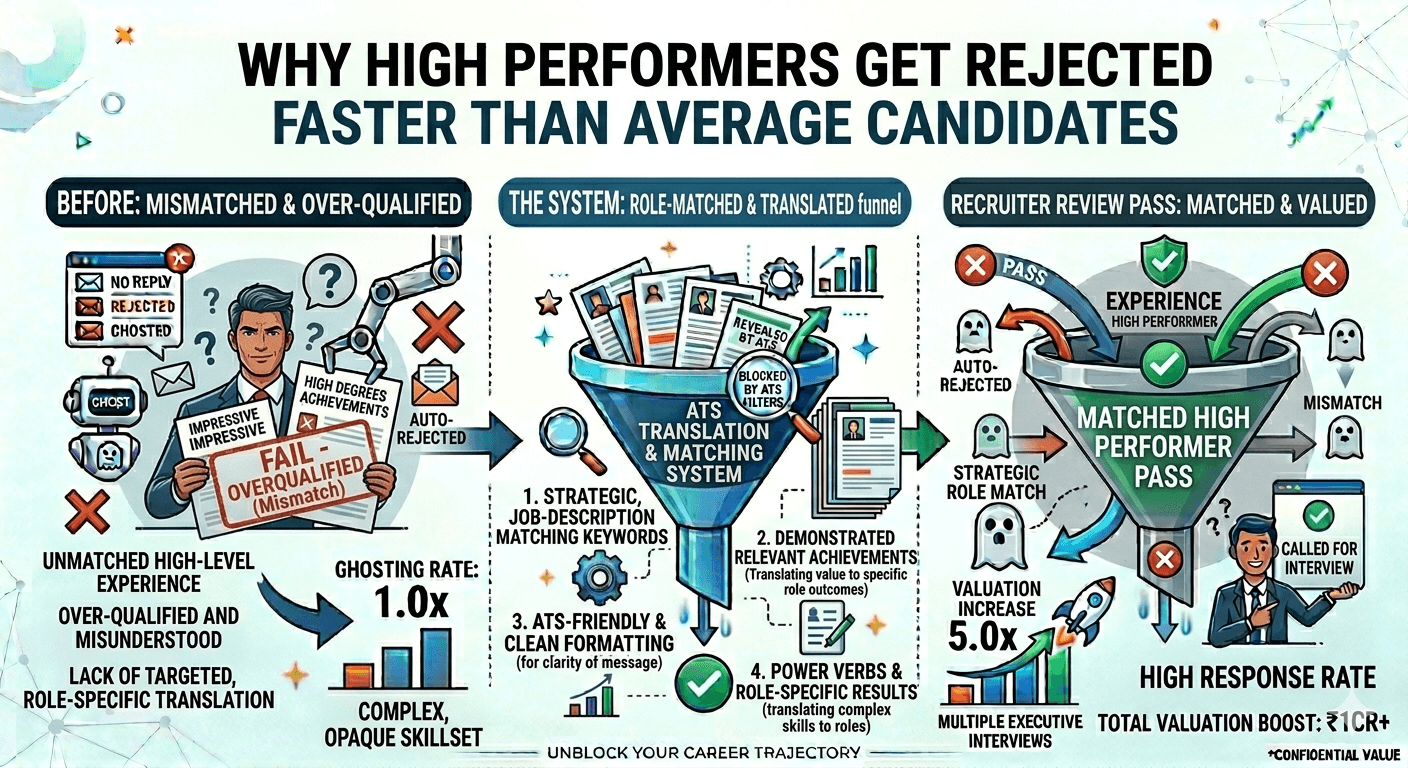
Why High Performers Get Rejected Faster Than Average Candidates
Why High Performers Get Rejected Faster Than Average Candidates
Resume
5 min read
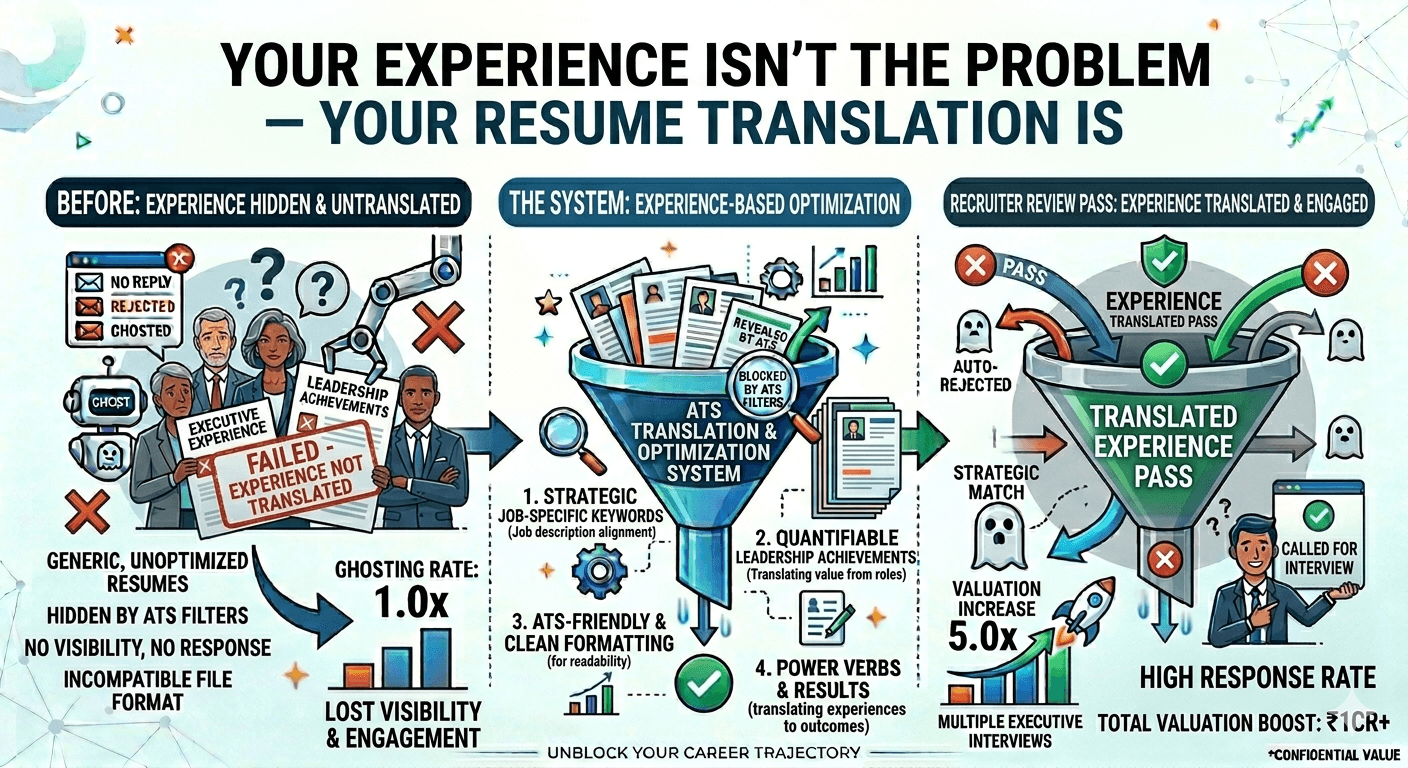
Your Experience Isn’t the Problem, Your Resume Translation Is
Struggling to get interviews despite strong experience? Discover how an ATS Resume Checker reveals hidden resume gaps and helps you translate your experience into results that recruiters actually notice.
Resume
5 min read
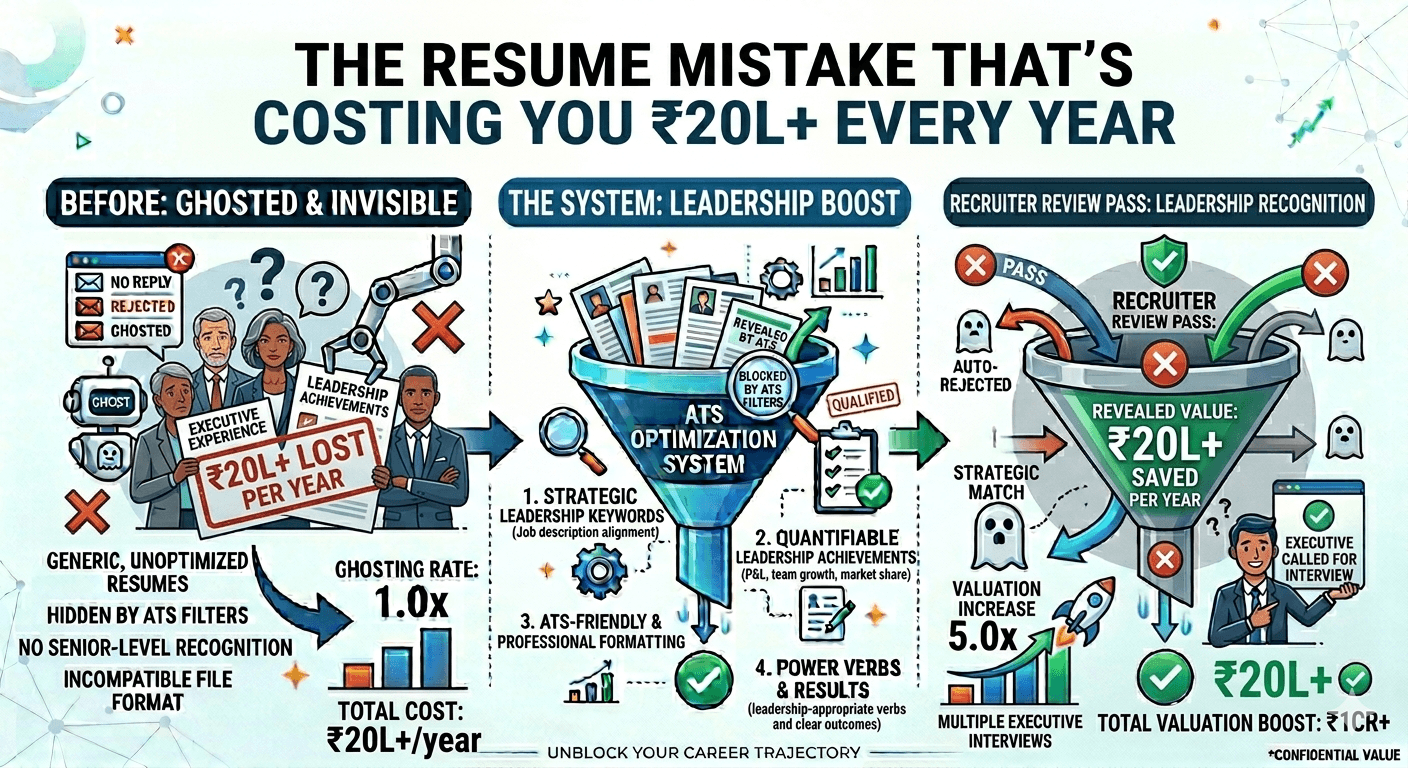
The Resume Mistake That’s Costing You ₹20L+ Every Year
The Resume Mistake That’s Costing You ₹20L+ Every Year
Resume
5 min read
Why High Performers Get Rejected Faster Than Average Candidates
Why High Performers Get Rejected Faster Than Average Candidates
Resume
5 min read
Your Experience Isn’t the Problem, Your Resume Translation Is
Struggling to get interviews despite strong experience? Discover how an ATS Resume Checker reveals hidden resume gaps and helps you translate your experience into results that recruiters actually notice.
Everything you need to know
Here you can find solutions to all your queries.
Join the Revolution
Your AI career copilot to land you top jobs in under 90 days.
Join the Revolution
Your AI career copilot to land you top jobs in under 90 days.
Join the Revolution
Your AI career copilot to land you top jobs in under 90 days.